
When discussing Amazon store management services, it's important to understand this isn't about hiring a virtual assistant. It's about integrating a specialized team that operates as an extension of your company, dedicated to maximizing your brand's performance on the world's largest e-commerce platform. For brand owners managing multiple responsibilities, this partnership is a significant operational advantage. It allows a shift from handling routine tactical details to focusing on strategic brand growth and product development.
This approach means moving away from the daily grind of Amazon operations and gaining a strategic partner focused on growth. A professional management service handles the entire lifecycle of a product on the platform, from launch strategy to post-purchase customer service. This frees up internal resources to concentrate on core business functions, like innovation and market expansion, while the agency manages the complexities of the Amazon channel.
What Is Modern Amazon Store Management?
The old model of hiring someone for simple ad adjustments and listing updates is obsolete. Today's Amazon store management involves a deep partnership where an agency functions as a dedicated division of your company, focused entirely on your Amazon channel. The scope of work covers everything from initial product research to customer feedback management. A key component of this is knowing how to create an Amazon storefront that effectively communicates your brand’s value proposition and converts visitors into customers.
This partnership transforms a potentially chaotic and resource-intensive sales channel into a streamlined, predictable, and scalable revenue stream.

1. Strategic Outsourcing
You cannot be an expert in every aspect of Amazon. The marketplace in 2026 is exceptionally complex, with continuous algorithm updates, new advertising formats, and logistical challenges that can disrupt operations. Building an in-house team with the required specialized knowledge is both difficult and expensive.
Engaging an agency provides direct access to a team of seasoned experts. This approach connects functions that are often siloed within a company:
- Inventory Forecasting: Services use predictive analytics to prevent stockouts during demand spikes and avoid long-term storage fees on slow-moving products.
- Brand Protection: The team actively monitors for counterfeit sellers, enforces MAP pricing, and corrects unauthorized listing changes.
- Advertising & SEO: A unified strategy is created where paid campaigns enhance organic rankings, and search data informs ad spend.
- Catalog Optimization: Each detail page is optimized to be "retail-ready" with A+ Content, persuasive copy, and relevant backend search terms.
- Customer Service: The service manages reviews and customer inquiries to maintain positive account health metrics.
2. Beyond Daily Operations
The primary objective is to reclaim your time. Instead of managing spreadsheets, troubleshooting suppressed listings, or manually adjusting ad bids, you can focus on high-level strategy. This allows more time for new product development, brand storytelling, and exploring additional growth channels. Your agency manages the tactical execution required to meet your strategic goals, providing clear data and insights to inform your decisions for the brand's future on Amazon.
The Five Pillars of Management
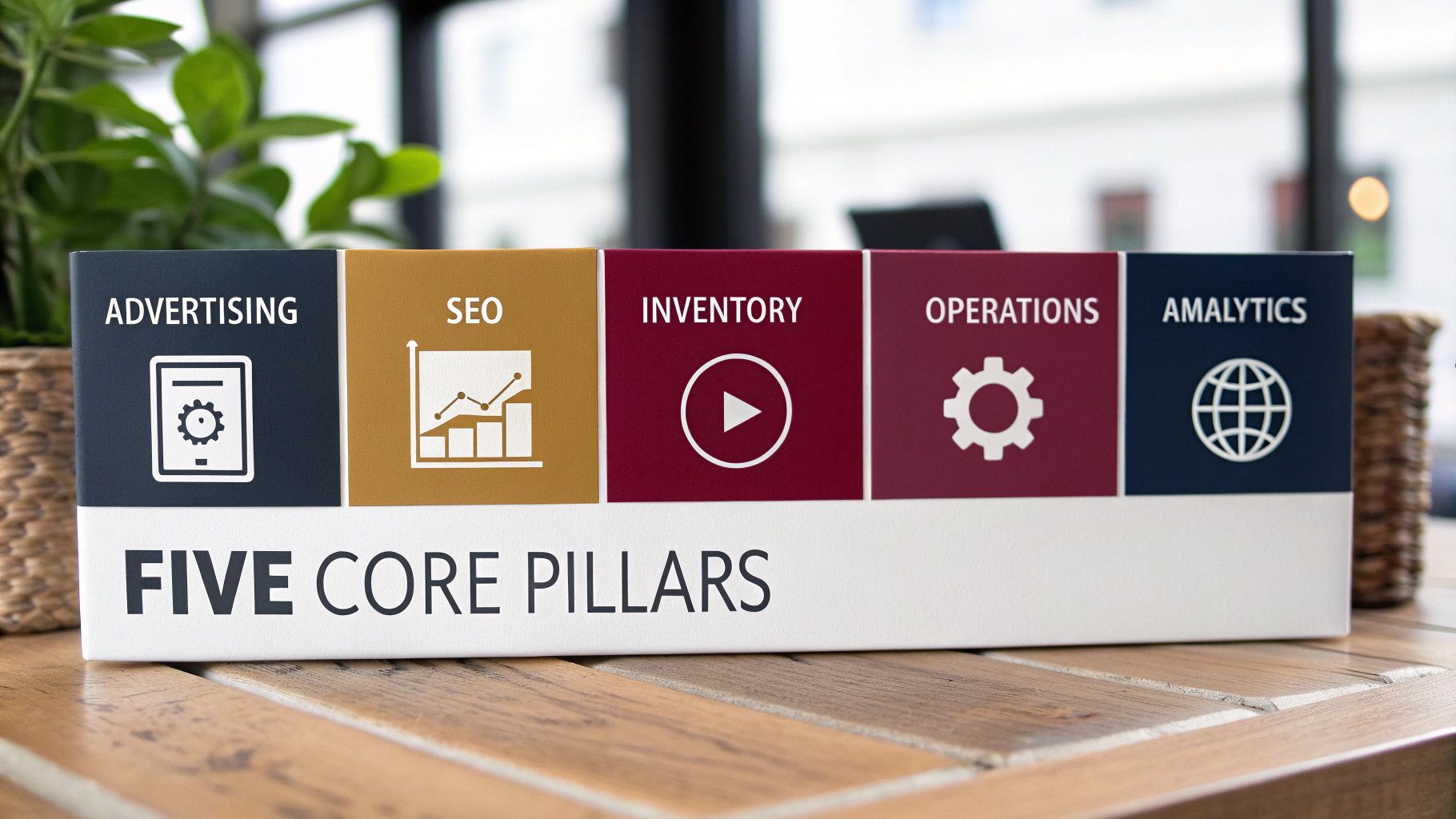
A successful Amazon store operates like a high-performance vehicle; it requires more than just a powerful engine. A top-tier Amazon management service is built on five interconnected pillars that must work in unison to achieve sustainable growth. If one pillar fails, the entire structure is compromised. For example, excellent advertising is useless if you run out of stock. Understanding these core components is essential when evaluating an agency to determine if they offer tactical support or true strategic management.
1. Advertising & PPC
Advertising is often the most visible component, but professional PPC management is about more than launching automated campaigns. It's a precise process where every dollar is tracked and optimized for maximum return. A professional agency develops sophisticated campaign structures, segmented by match type (broad, phrase, exact) and product lifecycle stage (launch, growth, maturity). For instance, a broad "catch-all" auto campaign can be used to discover new, profitable keywords, which are then moved into focused exact-match campaigns to capture that specific traffic.
The key metric that distinguishes professional management is Total Advertising Cost of Sale (TACoS). While ACoS measures ad efficiency, TACoS shows the impact of ad spend on total sales, including organic. A decreasing TACoS indicates that ads are successfully boosting organic rank and creating a growth flywheel.
2. SEO & Listing Optimization
If ads drive traffic to your store, your product listings are what convert that traffic into sales. SEO and listing optimization aim to achieve two objectives: get discovered by the right shoppers and persuade them to make a purchase. The process begins with in-depth keyword research to identify the exact terms customers use. These keywords are then integrated naturally into the title, bullet points, and A+ Content to create compelling, benefit-driven copy that appeals to both shoppers and Amazon’s A10 algorithm.
Modern optimization also includes:
- A Complete Image Stack: Utilizing all seven to nine image slots with high-resolution lifestyle photos, infographics, and comparison charts to answer customer questions visually.
- Rich A+ Content & Brand Story: These modules build trust, showcase brand personality, and can be used to cross-sell other products.
- Product Videos: Adding a video to the image carousel is an effective way to increase conversion rates by showing the product in use.
3. Catalog & Inventory
This is the operational core of your business. Stockouts kill sales momentum and damage organic ranking, while overstocking ties up capital and incurs high FBA storage fees. A management service uses forecasting tools and sales data to maintain optimal inventory levels. Catalog management also involves technical tasks like fixing suppressed listings, merging duplicate pages, and organizing product variations. A well-maintained catalog provides a better customer experience and generates clean data for decision-making. For more information, our guide on the best Amazon inventory management software is a useful resource.
4. Operations & Account Health
Amazon has strict performance standards. A single policy violation can lead to a suspended listing or account deactivation. This pillar focuses on defensive measures, proactively managing account health to ensure business continuity.
This requires monitoring key metrics that Amazon tracks closely:
- Order Defect Rate (ODR): Must remain below the 1% threshold.
- Late Shipment Rate (LSR): For merchant-fulfilled orders, this must be under 4%.
- Valid Tracking Rate (VTR): Must be above 95%.
A reliable agency manages customer service, processes returns, and promptly addresses any performance notifications from Amazon. They stay current with Amazon's changing policies, acting as a safeguard against disruptions that could affect your revenue.
5. Analytics & Reporting
Data connects all pillars of the strategy. A quality agency provides more than just raw data; they analyze information from Seller Central, Brand Analytics, and advertising reports to develop a clear, actionable plan. This strategic analysis identifies customer demographics, high-performing search terms, complementary product purchases, and competitor activities. This oversight transforms daily tasks into a long-term growth strategy, identifying opportunities and addressing weaknesses before they become significant issues. The Amazon of 2026 demands this comprehensive approach, especially as 77% of sellers now concentrate on fewer than 10 high-quality products due to rising FBA fees and ad costs since 2022.
Measuring Strategic Value and ROI
Engaging an Amazon store management service is an investment that must deliver a clear return. Brand owners need to know how paying an agency will increase profitability. The value extends beyond top-line sales growth; a true partner impacts the bottom line by improving inventory management, increasing conversion rates, and optimizing advertising efficiency.

1. Connecting Fees to Metrics
The most direct way to measure an agency's impact is through advertising performance. The defining metric is Total Advertising Cost of Sale (TACoS). While a low Advertising Cost of Sale (ACoS) on a single campaign is positive, TACoS provides a holistic view by measuring total ad spend against total sales (paid and organic). A declining TACoS is the strongest indicator that your advertising is creating a flywheel effect, boosting organic sales and building long-term brand equity.
A skilled agency should be able to reduce your TACoS from an inflated 20% down to a healthy 8-12% within approximately six months. This demonstrates that ad spend is not just acquiring sales but also improving organic ranking and generating more profitable, non-ad-driven revenue.
This is achieved by systematically harvesting high-performing keywords from automatic campaigns and deploying them in targeted manual campaigns. If you need more clarity on these ad metrics, our guide on ACoS vs. ROAS offers a detailed breakdown.
2. Quantifying Opportunity Cost
The cost of not hiring an expert extends beyond the agency fee. It includes missed opportunities and preventable errors that erode profits. This opportunity cost can be substantial.
Consider these common issues for brands managing their own accounts:
- Lost Sales from Stockouts: A week-long stockout of a top-selling product can result in significant lost revenue and a drop in the Best Seller Rank (BSR) that was difficult to achieve.
- Wasted Ad Spend: Without daily oversight, it's easy to waste thousands on irrelevant keywords or poorly structured campaigns.
- Risk of Account Suspension: A single overlooked policy violation can lead to a store shutdown, halting all revenue.
3. Agency Value Vs. In-House
A side-by-side comparison of costs and outcomes often highlights the financial benefits of an agency partnership. The agency model provides access to a higher level of expertise at a fraction of the cost of full-time salaries.
| Metric | In-House Team | Agency Management |
|---|---|---|
| TACoS | 18-25% | 8-12% |
| Conversion Rate | 10% | 15%+ (with optimized listings) |
| Stockout Days/Yr | 14-21 days | 0-3 days |
| Wasted Ad Spend | 15-20% of budget | < 5% of budget |
When you apply your own revenue and ad spend figures, the financial case becomes clear. The agency fee is often quickly covered by gains in ad efficiency, increased sales from higher conversion rates, and protected revenue from strong operational control. Ultimately, the value of professional Amazon store management services is about building a more resilient, predictable, and profitable business.
How Agencies Use Data for Growth
For a top-tier Amazon agency, "data-driven" is the entire operational model. Decisions are not based on intuition; every action, from a headline change to an ad spend adjustment, is supported by data. This requires analysis that goes beyond surface-level metrics like total sales. A professional team examines advertising attribution, search query performance, and Amazon Brand Analytics to understand shopper behavior. This separates a reactive approach from a proactive, growth-oriented one.

1. Turning Metrics to Action
Effective Amazon store management services translate complex data into simple, profitable actions. They focus on metrics that directly impact the bottom line and uncover hidden opportunities.
Unit Session Percentage (Conversion Rate): This metric shows the percentage of visitors who make a purchase. High traffic with low conversions indicates a problem with the listing. This triggers a plan to A/B test the main image, revise the bullet points, or add a video.
Session Data by ASIN: Knowing which products receive the most traffic helps allocate resources effectively. An ASIN with high traffic but low sales is a "leaky bucket," wasting ad spend. A product with a high conversion rate but low traffic is a prime candidate for a targeted PPC campaign.
Advertising Attribution Reports: These reports show the complete customer journey. An agency can see how a Sponsored Brands video ad led to a sale days later through a Sponsored Products ad. This allows for the creation of comprehensive campaigns that guide shoppers from discovery to purchase.
2. Using Predictive Analytics
In 2026, top Amazon management relies on predictive strategy. This is essential on a platform where machine learning adjusts sub-categories every 15 minutes. For example, the Shipment Proximity Index is an internal score that rewards sellers with inventory distributed across Amazon’s fulfillment network. Ignoring this can negatively impact rankings, while professionals will use Multi-Node Inbound options to gain an advantage.
Predictive analytics is also crucial for inventory management. By analyzing historical sales, seasonality, and upcoming promotions, agencies can forecast demand with high accuracy. This helps avoid two major inventory problems:
- Stockouts: Running out of stock during a peak period quickly kills sales momentum and organic rank.
- Overstocking: Tying up capital in slow-moving products and incurring long-term storage fees directly reduces profits.
3. Monitoring Hidden Signals
Beyond standard reports, the best agencies monitor the subtle, often undocumented signals that Amazon’s algorithm uses for ranking. For brands aiming to scale, this deeper data layer is essential. Advanced tools like the Amazon Marketing Cloud can provide a richer view of the customer journey and ad performance. An agency's real value is in connecting these data points into a cohesive strategy. They identify market gaps by analyzing competitor weaknesses, adjust pricing based on real-time demand, and pivot ad spend to capitalize on emerging search trends. This transforms your store from a simple retail page into a data-powered sales engine.
How to Choose Your Partner
Selecting the right agency is as important as the decision to hire one. This is not about delegating tasks; it's about finding a strategic partner who will directly influence your brand's future on Amazon. A poor choice can lead to wasted ad spend, stalled growth, and frustration. A thorough vetting process is necessary to look beyond the sales pitch and examine a potential partner's skills, systems, and track record. The goal is to find a team whose expertise aligns with your products, business goals, and operational style.
1. Evaluating Expertise and Fit
First, look for evidence of relevant experience. An agency successful with CPG brands may not have the right strategy for high-ticket electronics. The approach for a fast-fashion brand differs significantly from that for a niche B2B industrial product.
When speaking with a potential agency, focus on these areas:
- Relevant Case Studies: Ask for examples of brands managed in your specific niche or a similar one. You need proof they have solved problems like yours.
- Team Structure: Inquire about who will work on your account. Will you have a dedicated account manager and direct access to specialists? A siloed team can deliver a disconnected strategy.
- Communication Cadence: Clarify the frequency of meetings and the format of their reports. A good partner will have a clear schedule for strategy calls and provide reports that translate data into actionable insights.
Professional management is now a requirement for growth on Amazon. Independent U.S. sellers averaged over $290,000 in sales in 2024, but many brands cannot sustain this without expert help. With over 2.5 million active sellers competing for the attention of 230 million+ Prime members in the U.S., a data-driven strategy is essential to succeed.
2. Understanding Pricing Models
Agency fees are a significant investment, and the pricing structure reflects an agency's philosophy. Most Amazon store management services use one of three common models:
- Flat Monthly Retainer: A fixed fee paid each month, regardless of sales. It's predictable and easy to budget, suitable for brands needing consistent operational support.
- Percentage of Sales: The agency takes a percentage of your total Amazon revenue. This model aligns the agency's success with yours, as their compensation increases with your growth.
- Hybrid Model: A combination of a lower flat retainer and a performance-based fee, such as a smaller percentage of sales. This model balances predictability for the brand with a growth incentive for the agency.
The right model depends on your brand's revenue, stability, and growth objectives. Understanding these options is the first step toward a financially sound partnership. If you need more guidance, our article on choosing an Amazon seller consultant can provide further clarity.
Frequently Asked Questions
Even with a clear understanding of what an Amazon management agency does, a few key questions often arise. Here are straightforward answers to common inquiries from brand owners.
1. What is the typical cost?
The cost of Amazon store management varies based on your catalog size, business complexity, and the scope of services required. Agencies typically use one of three pricing models:
- Flat Monthly Retainer: This is a fixed fee, usually ranging from $2,000 to $10,000+ per month. It offers predictability for brands needing consistent operational and advertising support.
- Percentage of Total Sales: The agency earns a percentage of your total Amazon revenue, typically between 4% and 10%. This model aligns the agency's incentives directly with your sales growth.
- Hybrid Model: This combines a lower monthly retainer with a performance bonus, offering a balance between fixed costs and growth-based incentives.
Before signing an agreement, clarify what is included in the fee, such as software licenses, creative work like A+ Content design, or ad spend management.
2. How long until I see results?
An agency can address immediate issues like suppressed listings or inefficient ad campaigns right away. However, sustainable growth typically takes 90 to 120 days to become evident.
The first month is dedicated to auditing your account, conducting keyword research, analyzing competitors, and developing a strategic roadmap. During the second and third months, the agency executes the plan by launching new ad campaigns, optimizing listings, and collecting data to measure performance. A reputable agency will not promise overnight success but will set clear KPIs and demonstrate measurable progress toward long-term, profitable growth within the first quarter.
3. What is the brand owner's involvement?
Your involvement will be highest during the initial onboarding phase. This is the time to provide your business background, brand guidelines, product details, and strategic goals. A thorough onboarding process is crucial for a successful partnership.
Once the strategy is implemented, a good agency should operate with significant autonomy, managing daily tasks without constant oversight. However, the partnership should be collaborative. Expect to participate in regular strategy calls, typically weekly or bi-weekly, to review performance, discuss new ideas, and approve major decisions like budget adjustments or product launches. Your role will shift from day-to-day management to providing strategic direction.
4. Can an agency guarantee sales or rankings?
No. An agency that guarantees a specific sales figure or a #1 ranking for a competitive keyword should be avoided. The Amazon marketplace is too dynamic for such guarantees; algorithms change, new competitors emerge, and consumer behavior shifts. These promises are a significant red flag.
What a reputable agency can guarantee is a professional, data-driven process designed to achieve results. They should provide data-backed forecasts and commit to performance targets on metrics they can control, such as lowering ACoS, increasing conversion rates, or driving organic traffic.
Their commitment is to the quality of their work and a transparent, results-focused partnership. They are accountable for executing a smart strategy that leads to sustainable growth over time.