
Amazon’s return policy generally gives you 30 days to send back most new, unopened items for a full refund. But as any experienced seller or frequent buyer knows, it’s not always that straightforward.
However, the real pain of a return is not merely the lost money; it is the hit your search ranking takes when a sale is reversed. The algorithm tracks every cancellation and too many reversals signal that your product failed. Amazon advertising management compensates for this by routing fresh buyers to your listing, and persuades the algoritham that the product is still in demand despite the occasional refund.
That 30-day window is a baseline. Depending on the product category, the timeframe can be shorter, especially for electronics or renewed items. For sellers, understanding these details is essential for managing customer expectations and controlling operational costs.
A Quick Guide to Amazon Returns
Whether you’re a buyer returning a shirt that doesn’t fit or a seller managing inventory, Amazon’s return system can seem complex. It’s designed to build customer trust but is governed by specific rules based on what you bought and who you bought it from.
This flexibility is a major reason shoppers prefer Amazon, but it can create challenges for sellers, particularly those using fulfillment services. If you run an FBA business, you must follow Amazon’s rules, which directly affect your inventory and profitability. You can learn more in our guide on what is Amazon FBA.
Here’s a look at what a buyer typically sees when starting a return.
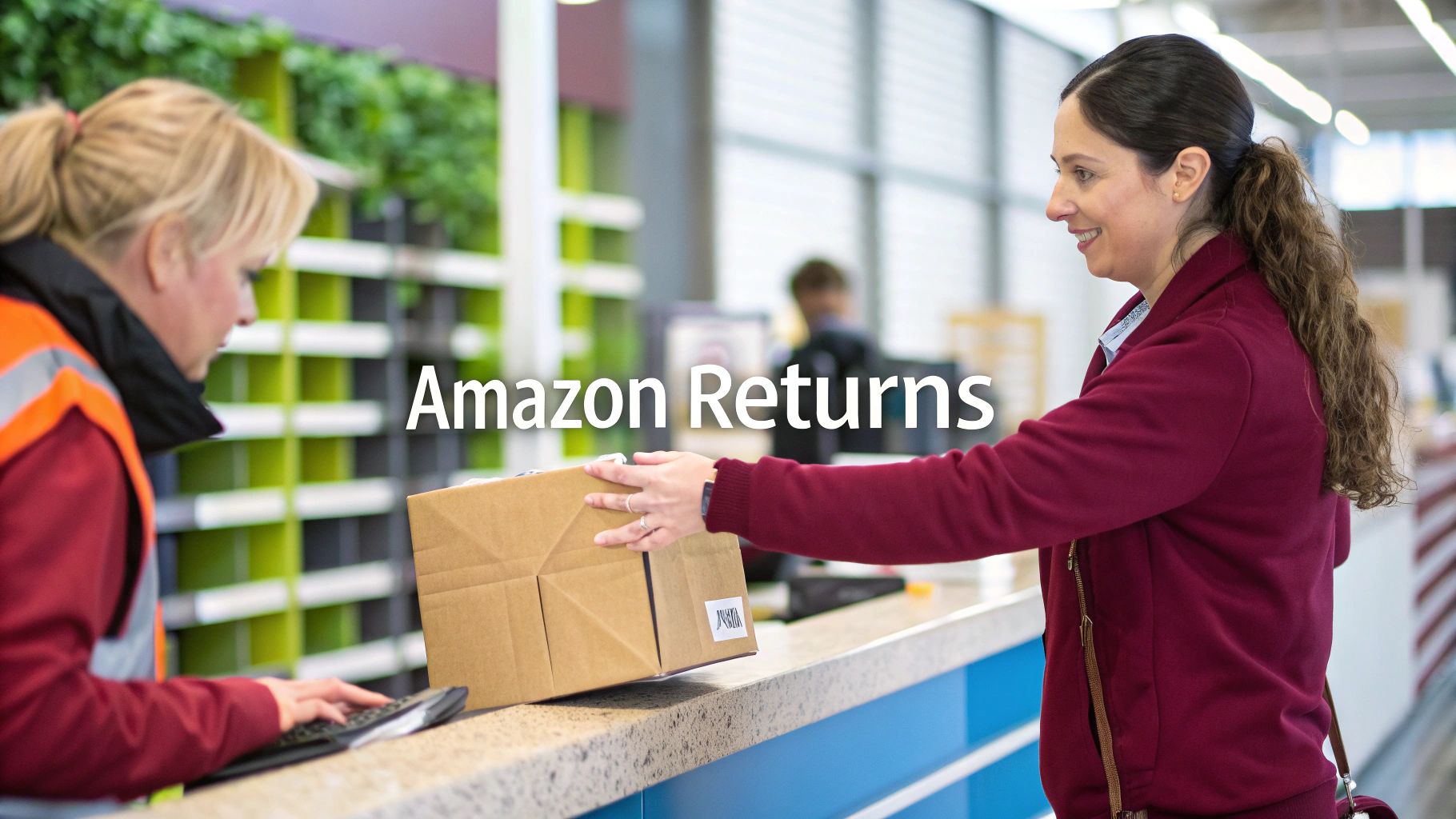
The options now include convenient drop-off locations that are often free and don’t require a box.
Here are a few key points to remember:
- The Standard 30-Day Window: This applies to most products sold on the platform.
- Holiday Season Extensions: Policies are more flexible around the holidays. Items shipped during the peak season usually have an extended return deadline into late January.
- Third-Party Seller Policies: While sellers can set their own return policies, they must be at least as accommodating as Amazon’s.
Common Return Windows by Category
This table outlines the standard return periods for different product types, showing how much they can vary.
| Product Category | Standard Return Period |
|---|---|
| Most New Items | 30 days from receipt |
| Baby Items | 90 days from receipt |
| Amazon Renewed | 90 days from receipt |
| Wedding Registry Gifts | 180 days from receipt |
| Some Electronics & Apple Products | 15 days from receipt |
| Collectibles & Fine Art | 14 days from receipt |
As you can see, a 90-day window for baby items is quite different from the 15 days for a new laptop. Always check the specific policy for an item to avoid surprises.
Why the Return Policy is a Balancing Act
Amazon’s return policy is a system designed to balance customer satisfaction with operational costs. It aims to keep buyers happy and returning while managing the logistics of millions of returns weekly. For buyers, a forgiving policy builds trust and encourages purchases. For sellers, it’s a part of the customer experience that can also impact profits if not managed well.
The scale is immense. Industry experts estimate Amazon processes between 1.2 to 1.5 billion returned packages annually. While its return rate of 5% to 15% is slightly better than the e-commerce average, the financial impact is significant, with annual costs estimated between $40 to $88 billion. This figure includes shipping, handling, inspection, restocking, or disposal. You can get a better sense of the logistics of Amazon returns to see the full picture.
This expense is why Amazon adjusts its policies, such as adding fees for certain returns or shortening return windows for some product categories.
The Two Sides of Amazon Returns
When you buy on Amazon, you’re not always buying from Amazon. The marketplace has millions of third-party sellers, which affects how your return is processed.
1. Sold and Shipped by Amazon
When a product is sold directly by Amazon, you’re dealing with their standard, company-wide return policy. These are typically the most straightforward returns. You initiate the process in your account, and Amazon handles everything.
2. Sold by a Third-Party Seller, Fulfilled by Amazon (FBA)
Many sellers use Fulfillment by Amazon (FBA). Their inventory is stored in an Amazon warehouse, and Amazon manages packing, shipping, and customer service, including returns. For a buyer, the process is nearly identical to buying from Amazon directly. For the seller, Amazon’s handling of these returns directly impacts their inventory and account health.
3. Sold and Shipped by a Third-Party Seller (FBM)
When a seller is Fulfilled by Merchant (FBM), they manage their own shipping, customer service, and returns. Amazon requires their return policy to be at least as good as its own, but the process may differ. You might need to communicate directly with the seller for your return.
Key Takeaway: Before buying, check who is selling and fulfilling the item on the product page. This detail clarifies which return policy applies and can prevent future issues.
Managing Return Risks
Amazon analyzes return data to identify patterns and potential misuse. Shoppers who return items too frequently may receive a warning or have their account reviewed. For sellers, a high return rate on a product can trigger an investigation and a temporary listing suspension. If you’re a seller facing these issues, our guide on what to do when your Amazon account is suspended is a valuable resource.
Understanding the reasons behind these policies helps everyone. For buyers, it means knowing your rights. For sellers, it’s about keeping customers happy while protecting your business.
What You Can and Cannot Return to Amazon
Amazon’s return policy is generous, but it’s not without limits. While most new, unopened items can be sent back within 30 days, there are exceptions and special conditions.
For a full refund, an item generally must be in the exact condition you received it: new, unopened, with all original packaging and accessories. Amazon needs to be able to resell it. If it’s used, opened, or the packaging is damaged, you may receive a partial refund or have the return rejected.
Products with Strict Return Policies
Some product categories have stricter rules due to safety, hygiene, or copyright concerns. Once these items are opened, they are typically non-returnable.
Here are items you usually cannot send back:
- Groceries and Fresh Food: Perishable items from Amazon Fresh and Whole Foods are not returnable. However, if your order is damaged or spoiled, you can usually get a refund or replacement.
- Digital Products: Once you download software, video games, or Kindle eBooks, the sale is final.
- Gift Cards: Both physical and digital Amazon gift cards are non-returnable and cannot be redeemed for cash.
- Hazardous Materials: Items containing flammable liquids or gases cannot be shipped back. This includes certain perfumes and cleaning supplies.
- Live Plants and Insects: Live items like houseplants are a final sale.
Health and Personal Care Exceptions
Due to hygiene concerns, many health, beauty, and personal care items cannot be returned once opened. Anything that touches the skin is almost always non-returnable.
For example, supplements have specific guidelines. Sellers in this niche must understand how Amazon handles these returns. We cover this topic in our guide on how to sell supplements on Amazon.
Common non-returnable items if opened include:
- Skincare products like lotions and serums
- Makeup and cosmetics
- Vitamins and dietary supplements
- Personal grooming tools
Pro Tip for Buyers: Before opening a new product like face cream, confirm it’s what you ordered. If Amazon sent the wrong item, you can still return it for a full refund, but only if it remains sealed.
How Used and Refurbished Items Are Handled
The rules for used and refurbished products differ. Items from Amazon Warehouse (used or open-box deals) and Amazon Renewed (certified refurbished) have their own policies.
Amazon Warehouse items are covered by the standard 30-day return policy. Since each item is unique, you typically can’t get a replacement and will receive a refund instead.
Amazon Renewed products come with the Amazon Renewed Guarantee, giving you a full 90 days to return the product if you’re not satisfied. This extended window provides extra confidence when buying pre-owned.
Understanding Return Windows and Fees
The 30-day window was once the standard for Amazon returns, but that is no longer a universal rule.
Amazon continuously adjusts its operations to reduce costs and prevent return fraud. This means return windows have become more specific and tailored to the product category. It’s a balance between customer satisfaction and managing the logistics of billions of returns.
Category-Specific Return Windows
While the 30-day window still applies to many items, recent policy changes have tightened the timeframe for certain categories, like electronics and fashion, to between 14 and 21 days. Conversely, gifts bought during the holiday season often get an extended window until the end of January.
These adjustments are part of a broader strategy to prevent “wear-and-return” abuse and reduce the costs and environmental impact of reverse logistics. You can find more details about these policy changes at Bettershop Analytics.
Shorter windows for high-risk categories help Amazon address issues like “wardrobing,” where someone buys an outfit for a single event and returns it. A tighter timeframe for electronics also discourages using a new gadget for a short period before returning it.
Key timeframes to remember:
- 30 Days: The standard for most new items, like books and kitchen gadgets.
- 14-21 Days: Common for electronics, fashion apparel, and jewelry.
- 90 Days: Offered for baby items and products from an Amazon Baby Registry.
- Extended Holiday Window: Items shipped from early November through December 31 can usually be returned until January 31 of the following year.
Important Note: Always check the product detail page before purchasing. Amazon lists the exact return window for every item.
When Are Amazon Returns Free?
Free return shipping is a major benefit of shopping on Amazon. If a return is due to an error on Amazon’s part, such as a damaged, defective, or incorrect item, the return is almost always free.
Even for “buyer’s remorse” returns, shipping is usually free if you use one of Amazon’s designated drop-off locations, which include:
- Whole Foods Market
- Kohl’s
- The UPS Store
- Amazon Hub Locker locations
Using these drop-offs is simple. Often, you don’t need a box or shipping label; just show a QR code on your phone and hand over the item.
Potential Return Fees and Refund Deductions
While most returns are straightforward, some situations can result in fees or a partial refund.
1. Restocking Fees
Amazon may charge a restocking fee if an item is returned outside the return window or not in its original condition.
- Late Returns: If you miss the deadline, Amazon might still accept the return but could charge a restocking fee of up to 20% of the item’s price.
- Damaged or Used Items: Returning an item that is damaged, has missing parts, or is not in its original packaging could result in a restocking fee of up to 50%.
Returning a laptop with a large scratch and no power cord will likely incur a fee. Sellers also face various charges, detailed in our breakdown of Amazon fees for sellers.
2. Shipping Costs
If you bypass Amazon’s free drop-off options and use your own return method, you might have to pay for shipping. For instance, choosing a different courier for an item you no longer want will likely result in the shipping cost being deducted from your refund.
3. High-Value Items and Special Categories
For expensive items like fine jewelry or collectibles, Amazon has a stricter inspection process. If you return one of these items and it has been altered or damaged, you may receive a partial refund or no refund at all.
A helpful tip is to document the item’s condition with photos before shipping it back, especially if it’s expensive. This can be useful if a dispute arises.
The Rise of Returnless Refunds
In e-commerce, a refund typically involves returning the product. However, Amazon has increasingly adopted the returnless refund model.
This means you get your money back without shipping the item. This may seem ideal for buyers and problematic for sellers, but it’s a strategic decision based on economics.
For certain products, the cost of processing a return, including shipping, inspection, and repackaging, can exceed the product’s value. This is often true for low-cost, bulky, or heavy items. In these cases, it’s cheaper to let the customer keep, donate, or dispose of the item.
This is not a random act of generosity but a calculated move to reduce costs and maintain customer satisfaction. A buyer who receives an instant, hassle-free refund is more likely to shop again.
How Returnless Refunds Work
An automated system determines if an item qualifies for a returnless refund. While the exact algorithm is proprietary, several factors are considered. Sellers can configure rules in Seller Central to influence this process.
Sellers can customize rules to manage their financial risk:
- Price Point: You can set a price threshold. For example, a seller might set a rule for any item under $15 to be a returnless refund because return processing fees would eliminate any potential profit from reselling it.
- Return Reason: The reason for the return matters. A rule can be created for “defective item” returns, as a broken product likely wouldn’t be resold.
- Product Category: Some items, like personal care products, cannot be returned for hygiene reasons once opened and are good candidates for returnless refunds.
- Location: If return shipping from a remote area is excessively high, a returnless refund may be the more cost-effective option.
Seller Insight: Configuring smart returnless refund rules is a key part of modern Amazon inventory management. It helps cut losses on low-value returns, allowing you to focus on growing your business.
Why Returnless Refunds Are More Common
The use of returnless refunds has grown significantly, increasing by roughly 340% between 2022 and recent years. This surge is a strategic response to rising logistics costs and a method to build customer loyalty.
Data shows that about 78% of customers who received a returnless refund made another purchase within 30 days, compared to only 45% of customers who completed a traditional return. As a result, Amazon has given sellers more control over setting their own rules while adding fees for products with high return rates, encouraging more strategic reverse logistics. You can learn more about the growth of this trend from Sequence Commerce.
Ultimately, it’s about creating a smooth customer experience. A buyer who avoids the hassle of packaging and returning an item is more likely to be satisfied and become a repeat customer.
When to Offer Returnless Refunds
For sellers, this is a strategic decision, not about giving away free products, but about making the most financially sound choice.
Good Scenarios for Returnless Refunds:
- Low-Cost Items: If a product sells for $10 and the return costs $8 to process, returning it is not financially viable.
- Damaged or Defective Goods: There’s no value in paying to ship back an item that cannot be resold.
- Personalized Products: A custom-engraved item has no resale value.
- Heavy or Bulky Items: When shipping costs are high, letting the customer keep the item is often cheaper.
When to Require a Physical Return:
- High-Value Products: For expensive items like electronics, you’ll want them back for inspection before issuing a refund.
- Suspected Fraud: If you notice a pattern of frequent returns from the same buyer, requiring a physical return can help prevent fraudulent claims.
- Resalable Items: If the product is in perfect, unopened condition and can be easily resold, it’s worth the cost of return shipping.
The goal is to find a balance that protects your profits while keeping customers happy.
Practical Tips for Buyers and Sellers
Managing an Amazon return effectively requires preparation and knowledge of the rules. A poorly handled return can lead to disputes and lost money, while a few proactive steps can ensure a smooth process.
Advice for Buyers
Your goal is to make the return process simple to ensure you get your money back. This involves providing clear evidence and packaging the item correctly.
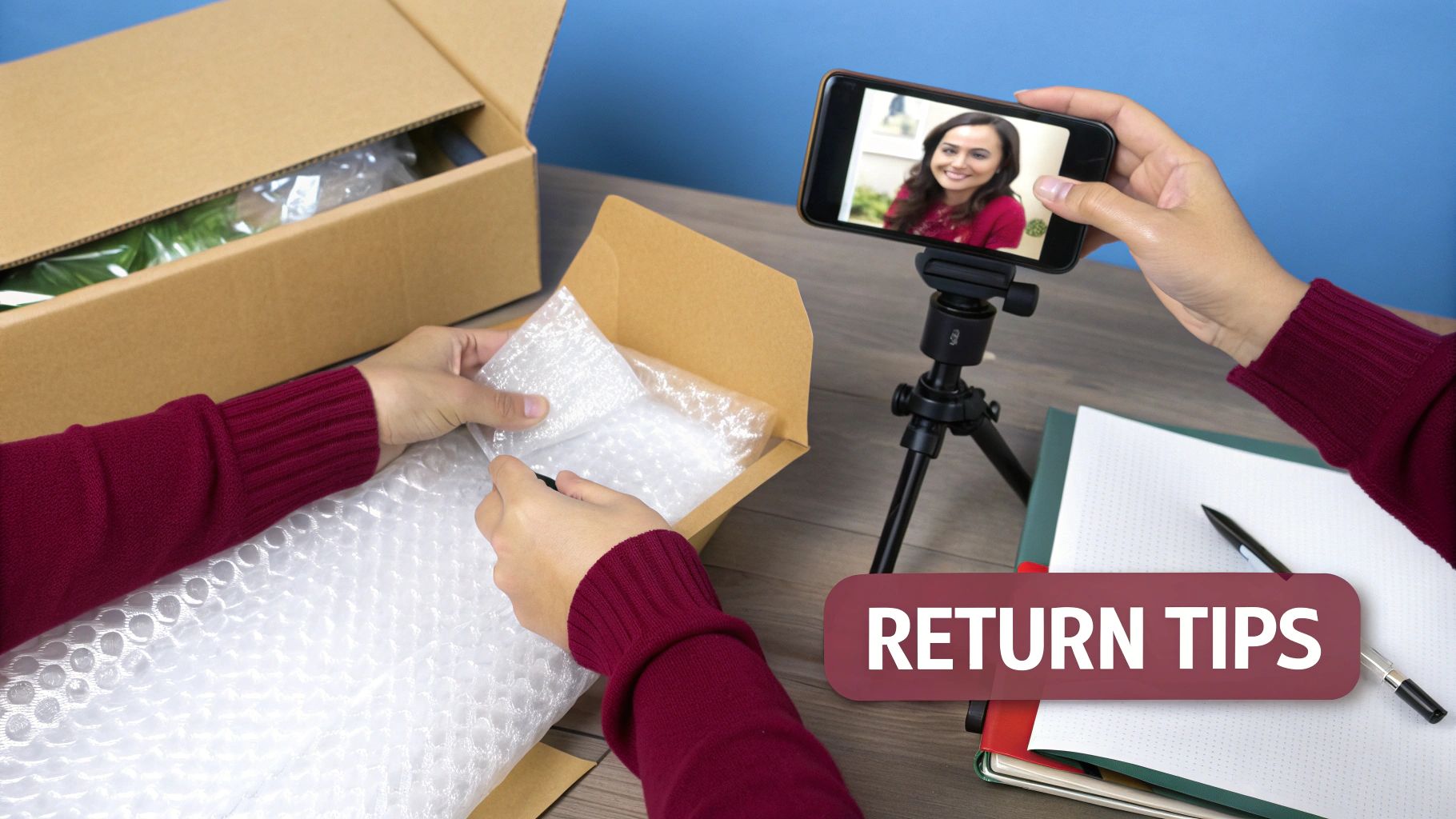
1. Document Everything with Photos
Before sealing the box, take photos of the item’s condition, especially if it arrived damaged. Also, take a picture of it packed securely in the box. This can serve as proof if the seller claims the item was damaged during return shipping.
2. Use the Original Packaging
Whenever possible, reuse the original product packaging and shipping box. This protects the item and helps meet Amazon’s criteria for a full refund. If the original box is unusable, find a sturdy replacement and pack it securely.
3. Choose the Right Return Reason
Be honest when selecting a return reason. Choosing “defective” for an item you simply changed your mind about can cause problems for the seller and may flag your return. An accurate reason helps the process run smoothly.
4. Understand Your Shipping Options
Amazon offers free drop-off options at locations like Kohl’s or The UPS Store, which are usually the best choice. If you choose a different shipping method, you may have to pay for it, and the cost could be deducted from your refund.
To avoid returns altogether, especially with clothing, a little preparation helps. Learning how to shop for clothes online like a pro can save you a lot of trouble.
Advice for Sellers
For sellers, managing returns is about protecting your business, identifying quality control issues, and preventing fraud.
Key Insight: Your return data is a valuable resource. Regularly analyze why customers are returning items to identify flaws in your product listing, packaging, or the product itself. This can help lower your return rate over time.
1. Monitor Your Return Reports
Use Seller Central to review your FBA customer returns report. This data shows what’s being returned and why. A high return rate for a specific ASIN is a red flag that needs immediate investigation to avoid account health warnings.
2. Configure Automated Return Rules
Use Amazon’s tools to set up automated rules to instantly approve returns that meet certain criteria. You can also issue “returnless refunds” for low-cost items where the return shipping is more expensive than the product. This speeds up the process for customers and reduces your administrative work.
3. Handle Disputes Professionally
If a buyer returns an item in a worse condition than when you sent it, you can charge a restocking fee. Use this option carefully and always document the damage with photos. When communicating with the buyer, remain professional and stick to the facts to avoid escalating the issue to an A-to-z Guarantee claim.
Got Questions? We’ve Got Answers
Here are answers to some common questions about Amazon’s return policy.
1. Are There Any Items I Can’t Return to Amazon?
Yes, some items are non-returnable. This typically includes digital downloads like software or games once they are downloaded. Many personal care products, health items, and groceries are also non-returnable for safety reasons. Items with special shipping requirements, such as hazardous materials, are also usually final sale. Always check the product detail page for specific return information before buying.
2. How Do I Actually Start a Return?
To start a return, go to ‘Your Orders’ in your Amazon account. Find the item you want to return and click the ‘Return or replace items’ button. Amazon will then guide you through selecting a return reason and choosing a return method, such as a drop-off location or a scheduled pickup.
3. When Will I See My Refund?
The refund timeline depends on your payment method and how you returned the item. Once Amazon receives and processes the return, a refund to a credit card usually takes 3-5 business days to appear. A refund to your Amazon Gift Card balance is often faster, typically within a few hours. Some returns are eligible for an “instant refund,” which is processed as soon as the return package is scanned at the drop-off point.
4. Do Third-Party Sellers Play by Different Rules?
Sometimes. While all third-party sellers must offer a return policy at least as favorable as Amazon’s, some may have their own specific terms. It’s a good idea to check their individual policy when buying from a marketplace seller. However, most of these purchases are protected by the Amazon A-to-z Guarantee, which serves as a safety net if the item is not as described or if you have issues with a seller’s return process.