
Amazon PPC success depends on targeting highly relevant keywords, including lower-volume “long-tail” keywords is “imperative to effectively optimize your ad spend and boost your conversion rate.
These highly specific multi-word phrases tend to cost less per click and improve conversion rates because they match precise buyer intent, a principle strongly noted in Ecom Brainly PPC management.
In fact, long-tail terms usually face far less competition than broad terms, making them ideal for sellers especially new or niche sellers who may lack the budget to compete on generic keywords.
Amazon long-tail keywords are three-or-more-word phrases shoppers type. These terms attract up to 60% less competition than broad terms and typically convert at 10–15%. Targeting these searches lowers your ad spend and boosts click-through rates in Amazon PPC.
What Are Long-Tail Keywords on Amazon?
On Amazon, a long-tail keyword is a specific search phrase, typically composed of three or more words. Customers use these phrases when they want to specify exactly what they’re looking for, often including product details like size, color, material or use-case.
For example, instead of the broad term “running shoes,” a long-tail query might be “women’s trail running shoes size 8 with arch support.”
This level of detail shows clear purchase intent. Long-tail keywords often have lower search volume but higher intent: fewer people type them, but those who do are usually ready to buy. They also align well with voice-search and conversational queries
1. Short Tail Versus Long Tail Keywords
Long-tail phrases have fewer competitors and a higher chance of turning a click into a purchase. In practice, this approach works with Amazon’s A10 algorithm, which favors relevance, sales history, and user satisfaction. This table illustrates the comparision of short tail vs long tail keywords.
| Keyword Type | Example Search | Volume | Competition | Buyer Intent |
|---|---|---|---|---|
| Short-Tail | running shoes | High | High | General (browsing) |
| Long-Tail | women’s trail running shoes size 8 | Lower | Lower | Specific purchase intent |
From 2024 through 2025, smaller brands used long-tail keywords to cut competition by 60% versus short-tail terms. These narrow searches convert at 10–15% compared to 9–10% for generic phrases. Learn more about these findings on MDS.
Check out our analysis of Amazon PPC effectiveness in our article Does Amazon PPC Work.
Why Long Tail Keywords Matter On Amazon
When a buyer enters a detailed phrase, they’ve already narrowed their options. That precision helps smaller brands compete with larger players in Amazon’s results.
1. Lower Competition & CPC
Very specific terms mean fewer advertisers bid on them. This drives down cost-per-click (CPC). In practice, you can often pay far less for a click on a detailed phrase than on a generic term.
2. Higher Conversion Rates
Long-tail searches reflect clear intent. Shoppers entering detailed queries are often closer to a purchase, so ads on those terms convert better.
These phrases improve conversion rates because the product description aligns precisely with what the shopper wants. Each click from a long-tail ad is more likely to turn into a sale.
3. Improved Ad Relevance:
Ads triggered by exact or phrase matches to long-tail keywords naturally align with the user’s request. This boosts your ad quality score and placement in auctions.
Higher relevance means your ads reach the right audience, which in turn makes your overall campaign more effective.
3. Better Targeting for Niches
If you sell niche or specialized products, long-tail keywords let you reach your precise audience without wasting spend on unrelated traffic.
For example, targeting “wireless earbuds for swimming” rather than just “wireless earbuds” ensures your ad appears only to swimmers. This hyper-targeting delivers more qualified traffic.
4. Lower ACoS / Higher ROAS
Because long-tail keywords often have lower CPC and higher conversions, they tend to produce a better advertising ROI. Using long-tail terms can significantly lower your ACoS (Advertising Cost of Sale) while keeping sales high.
In other words, you spend less for each dollar of revenue. Likewise, a long-tail-focused strategy typically yields higher ROAS (Return on Ad Spend).
5. Algorithmic Advantage
Amazon’s A10 search algorithm rewards relevance. Listings that match a user’s query closely (as long-tail keywords do) are more likely to rank higher organicall . By bidding on long-tail phrases and driving sales, you can also boost your organic placement for those specific terms, creating a virtuous cycle of visibility.
Long-tail keywords on Amazon aren’t just less competitive, they offer 10–15% conversion rates compared to 9–10% for broad searches. Read the full research on DarkroomAgency
Finding Best Long Tail Keywords

High-intent long tails are the specific phrases shoppers use when they’re ready to buy. By tapping into this search behavior, you can sharpen your ad spend and increase sales.
1. Search Term Reports
Search Term Reports appear in your Amazon PPC dashboard. They reflect exactly what shoppers typed before they clicked.
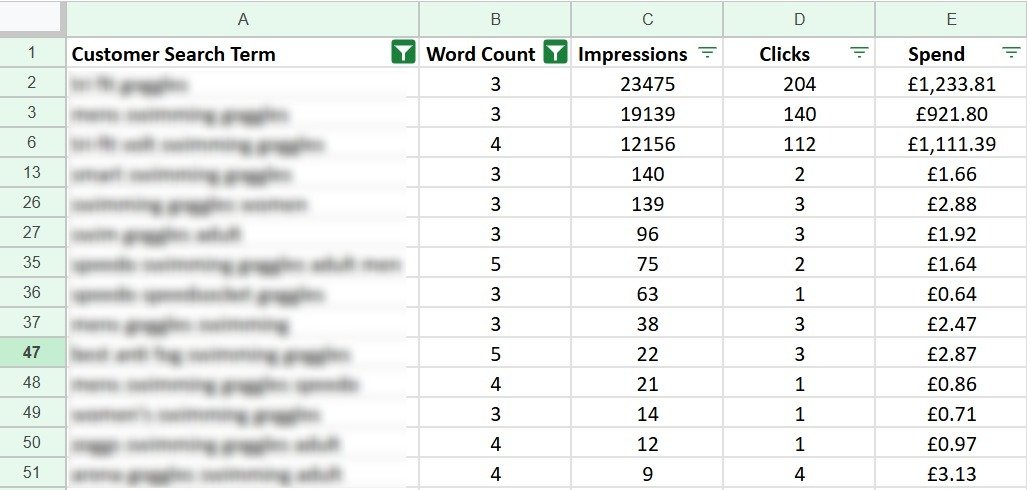
Run Amazon Sponsored Products ads, download the Search Term Report from Seller Central. Add column “Word count” and apply “word count” formula. Now apply filter “Greater than or equal to 3”. This would filter phrases with three or more words that grabbed at least 1 click.
2. Keyword Research Tools
Amazon SEO/PPC tools (Helium 10, Jungle Scout, MerchantWords, PPCAssist, etc.) can suggest long-tail keywords, show estimated search volumes, and even provide historic conversion data. For instance, Helium10 Magnet allow you to enter a seed keyword and receive hundreds of related keywords. Download and apply filters like in search term report to find the long tail keywords.

3. Reverse Engineer Competitor Listings
Use Helium 10 Cerebro to extract long tail keywords directly from competitors that already rank and convert. Enter multiple competitor ASINs into Cerebro to pull all indexed and ranking search terms.
From that list, apply the same filters used in the Search Term Report above: apply the word count formula to isolate multi-word phrases. This process surfaces long tail keywords Amazon already validates through competitor performance, eliminating guesswork and focusing only on terms with proven demand and commercial intent.
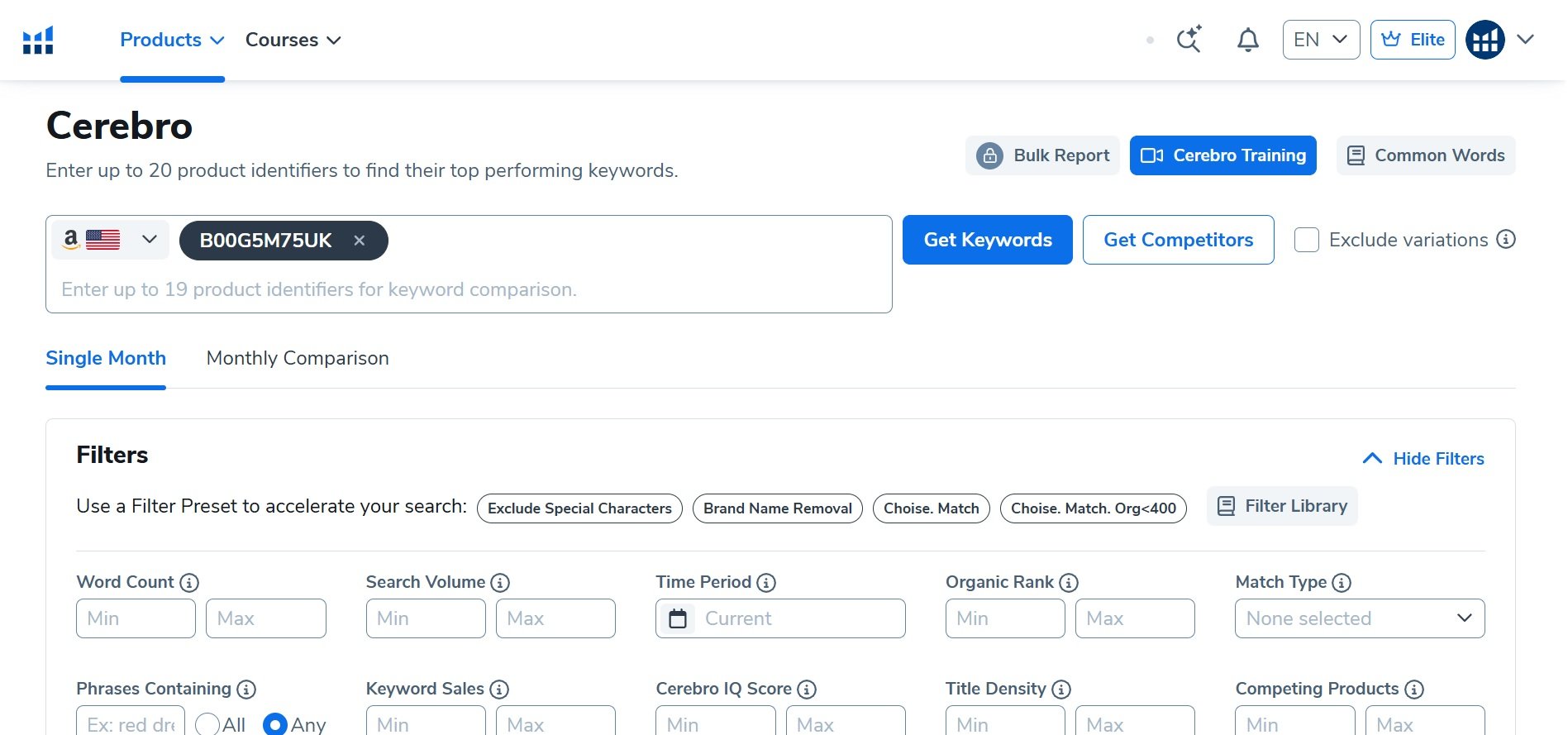
Focus on search terms with more than 200 monthly searches and a CPC under your target bid. For more options, see the best keyword research tool for Amazon.
Bringing these three methods together gives you a tight list of long tails with real purchase intent. Update it at least once a month to match shifting demand.
Using Long-Tail Keywords in Your Amazon PPC Campaigns
Once you have finalized your list of high-intent long-tail keywords, the research phase is over. Now, it is time to put those keywords to work.
Long-tail keywords require a specific structure because they have lower search volume but much higher conversion potential.
If you mix them indiscriminately with high-volume terms, Amazon’s algorithm will likely ignore them in favor of keywords that generate more traffic.
Follow this setup to ensure your long-tail keywords actually get impressions and drive sales.
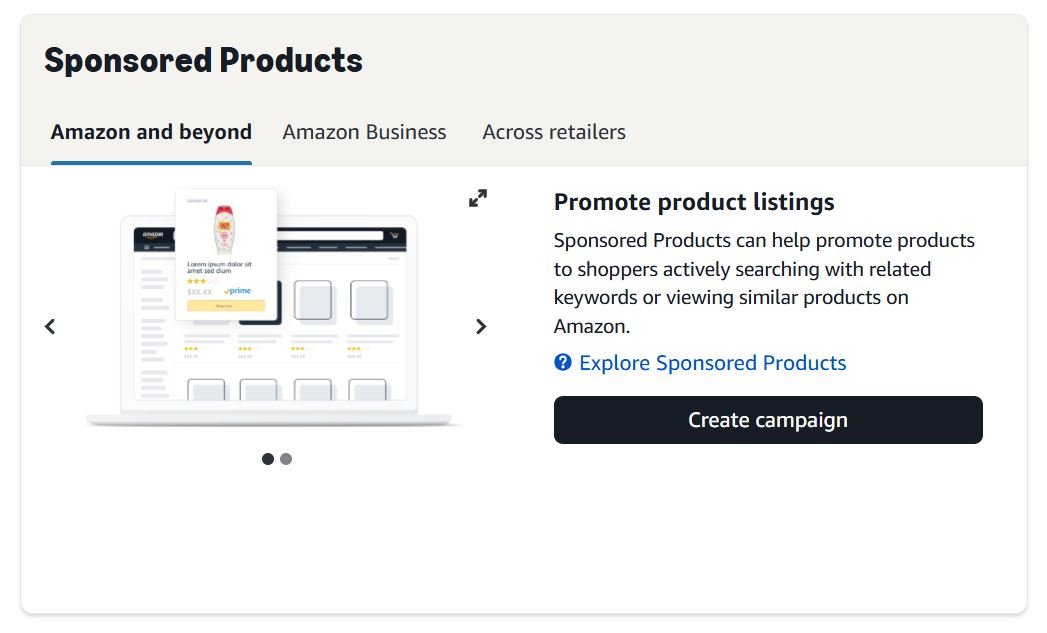
1. Start with Sponsored Products Ad Type
Begin by creating a new campaign and selecting Sponsored Products. While other ad types like Sponsored Brands have their place, Sponsored Products are the most effective choice for this strategy because they do most of the heavy lifting when it comes to organic ranking.
The sales from other ad types have low impact on ranking while our main goal is to get sales and organic ranks.
2. Isolate Keywords for Maximum Control
One of the most common mistakes sellers make is clogging a single Ad Group with dozens of keywords. If you place a high-volume keyword in the same group as a low-volume long-tail keyword, the high-volume term will consume the entire budget before the long-tail term ever gets a chance.
To prevent this, you must limit the number of keywords per Ad Group. This ensures that every specific phrase gets a fair amount of budget and exposure.
- Create 1 Ad Groups containing a maximum of 5 long-tail keywords each.
- If you have a high search volume keyword that is highly relevant, put it in its own Ad Group to have total control over its performance.
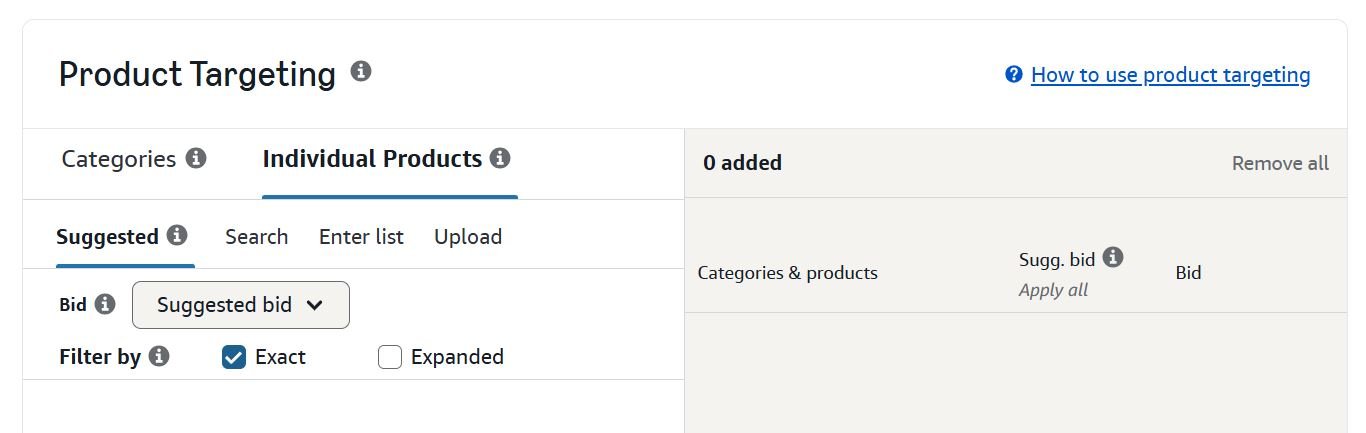
3. Use Exact Match Type
In the targeting section of your campaign, select Manual Targeting and strictly use Exact Match. You are targeting a specific customer thought process. If you were to use “Broad” or “Phrase” match, Amazon might show your ad for generic terms, which defeats the purpose of targeting the “tail.” You want your ad to appear only when a customer types that specific high-intent phrase.
4. Bid Aggressively Above the Suggestion
Because long-tail keywords have lower competition, they are generally cheaper, but they also have lower traffic volume. This means you cannot afford to miss an impression. When a customer finally types in that specific phrase, you need to ensure you win the auction.
Don’t rely on the standard suggestion. Look at Amazon’s “Suggested Bid” range and set your bid significantly higher.
Since the search volume is naturally low, you are unlikely to overspend your budget. You are simply guaranteeing that when that rare, high-value search happens, your product is the one they see.
Set your bid 10% to 20% higher than the upper range of Amazon’s suggested bid.
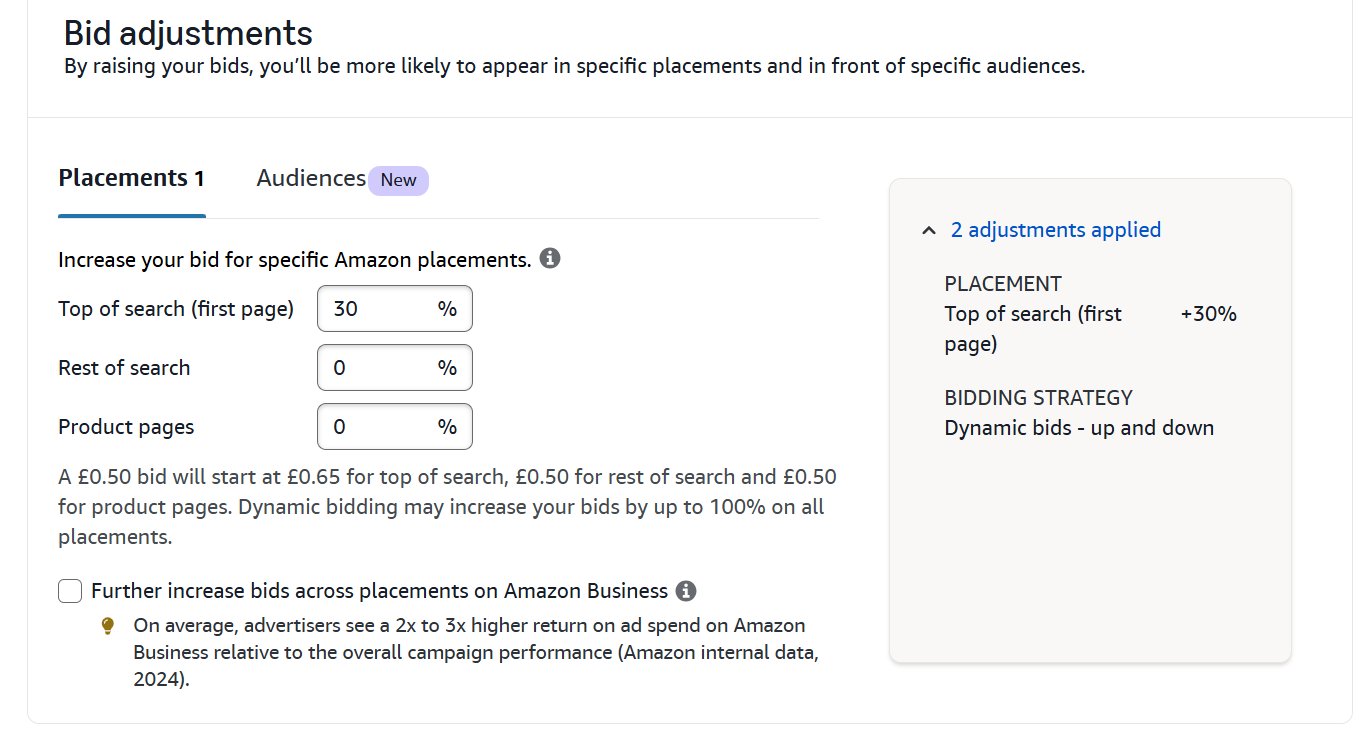
5. Target “Top of Search” to Boost Ranks
The ultimate goal with long-tail keywords isn’t just immediate sales; it is to improve your organic ranking. When a customer searches a long string of words, clicks your product, and buys it, it sends a powerful signal to Amazon that your product is the perfect match for that query. To make this happen, you need visibility at the very top of the page.
Go to the Placements tab in your campaign settings and find “Top of Search (First Page).” By adding a percentage boost here, you tell Amazon you are willing to pay a premium to appear in the first row of results. Apply a 20% to 50% boost for Top of Search placements to dominate the first page.
Final Relevance Check
Before launching, perform a final review of your product listing. If you are bidding on a specific phrase, ensure that phrase exists in your title, bullet points, or backend search terms. If the keyword is missing from your listing copy, Amazon may deem your product irrelevant and refuse to show your ad, regardless of how high you bid.
Measuring Performance And Optimization
Running Amazon PPC without tracking long-tail performance is like driving blind. Use tools like Jungle Scout keyword tracker or Helium 10 PPC Manager. A quick look at ACoS, CTR, and Conversion Rate helps you stop budget leaks before they drain your spend.
Visualize results in a simple dashboard. In Excel or Sheets, create columns for date, campaign name, keyword phrase, impressions, clicks, spend, sales, and ACoS. This layout surfaces trends fast so you can act.
1. ACoS (Advertising Cost of Sales)
ACoS shows what percentage of sales revenue goes to ads. Long-tail keywords usually lower ACoS because of their low CPC and high conversions. Track ACoS for each campaign or keyword group. A decline in ACoS over time can indicate success with your long-tail strategy.
2. ROAS (Return on Ad Spend)
Compute ROAS (revenue divided by ad spend) for your campaigns. A strong long-tail campaign often yields high ROAS, since you’re driving purchase-ready traffic efficiently. High ROAS means more sales per dollar spent, which is exactly the goal of using these targeted keywords.
3. Conversion Rate
Monitor the conversion rate of clicks from long-tail ads. Because these searches express specific intent, you should see higher conversion percentages than with broad terms. If a long-tail keyword has a low conversion rate, pause it.
4. Click-Through Rate (CTR) & Impressions
While long-tail CTRs can vary, focus on how much of your target audience you’re capturing. Even if CTR is modest, a long-tail query often has fewer impressions (because fewer people search it). The crucial point is efficiency: a high percentage of those who do see the ad end up converting.
Case Studies And Examples
Two of our partner sellers stories below show how Amazon long-tail keywords drive real ROI and helpful reduce Amazon ACoS.
1. Q Tips Case Details
A bulk Q-Tips listing struggled with low visibility and high cost per sale. Its CTR hovered at 2.1%. By adding four long-tail keywords they found in search term reports, CTR rose to 2.6%, and ACoS dropped from 45% to 22% in two weeks.
- Long-Tail Keywords Used: “bulk cotton swabs pack”, “bulk q tip refill”, “cotton bud pack bulk”, “bulk hygiene swabs”
- Bid Adjustments: +10% on top performers; –20% on underperformers
- Result: 24% more clicks and 51% lower ACoS
2. Newborn Set Case Details
An organic baby clothes brand faced a 38% ACoS and flat sales. They tested the phrase “100% cotton hypoallergenic newborn set.” After shifting budget, ACoS fell to 18% and sales rose 40% month over month.
- Research niche volume via Helium 10
- Launched phrase match ads for the new long tail
- Scaled bids by 12% on high-converting days
Conversions moved from 4% in week one to 8% in week two. Cost per click fell by 30%.
These examples follow the same process: dig into search term reports, spot high-intent phrases, set up targeted ads, and watch metrics transform.
Frequently Asked Questions
What Match Types Work Best For Long Tails?
Manual campaigns provide the granular control necessary for long-tail strategies. You should rely primarily on Exact Match to target specific search intent with accuracy.
How Many Long-Tail Keywords Should I Include Per Ad Group?
Prioritize quality over quantity by limiting each ad group to between 5-10 closely related keywords. Keeping the keyword count low ensures clearer performance data and faster insights, preventing high-volume terms from cannibalizing your budget. If your list exceeds ten terms, simply split them into a new, dedicated ad group to maintain granular control over your bids.
Can Long-Tail Keywords Improve Organic Ranking As Well As PPC?
Absolutely; successful PPC conversions on specific long-tail terms send a strong signal to Amazon’s A10 algorithm regarding your product’s relevance. As paid sales velocity increases on these niche phrases, you will likely see a corresponding lift in organic ranking often improving by 20% to 35% over just a few weeks.
Can I Put Long Tail Keywords in my Product Title?
Absolutely, as the product title carries the heaviest weight for Amazon’s ranking algorithm, making it the prime spot for your most valuable keywords. However, you must prioritize readability by weaving these terms naturally into the sentence structure rather than keyword stuffing. A title that flows well for human readers ensures a higher Click-Through Rate (CTR), which is ultimately essential for maintaining your rank.