
A generic, one-size-fits-all PPC campaign in the Toys and Games category is the fastest way to burn through an ad budget. This market is a different beast, driven by fierce brand loyalty and wild seasonal swings, meaning a scattergun approach doesn't work.
The foundation of a profitable strategy for Amazon PPC for toys and games is a campaign architecture built for control, scalability, and clean data. This involves separating campaigns by product lifecycle, targeting method, and core business goals to ensure every dollar is spent with purpose.

Toy Campaign Architecture
A messy campaign structure is like trying to build a LEGO castle without instructions. You might end up with something, but it'll be wobbly, inefficient, and ready to collapse at the first sign of pressure.
The objective is to build a clean, segmented structure that provides clear performance data. This allows for precise bid adjustments and budget shifts, which is essential for navigating the toy market, whether preparing for the Q4 holiday rush or launching a new collectible.
1. Product Lifecycle Segregation
Not every product in your catalog has the same mission. Combining a new launch with a year-round bestseller in the same campaign prevents you from optimizing for what each one needs to succeed. They must be broken apart.
Here's a practical approach:
- Evergreen Campaigns: For your core, year-round winners. The goal is to maintain steady, profitable sales and defend your position against competitors. These campaigns should be mature, stable, and highly optimized.
- Launch Campaigns: New products require a different strategy. Be aggressive, focusing on sales velocity and visibility, not immediate profit. Expect a much higher ACoS to gain traction, initiate reviews, and build organic rank.
- Seasonal Campaigns: For holiday-specific items or products with a clear peak season, like outdoor water toys in the summer. Activate and fund these campaigns heavily during their window, then pause them for the rest of the year to avoid wasting budget.
- Liquidation Campaigns: For aging inventory or a discontinued product. The sole objective is to recoup capital quickly. Bids can be aggressive, and the focus shifts to maximizing impressions and clicks to move units, even at a break-even ACoS.
2. Isolate Targeting Types
Mixing keyword targeting and ASIN targeting within the same ad group muddies your data, making it impossible to know which strategy is effective. For clean, actionable insights, each targeting type needs its own campaign.
For a single toy, you might have several Sponsored Products campaigns running:
- SP – [Product Name] – Auto: Your discovery campaign. Let Amazon's algorithm find new customer search terms and competitor ASINs you might have missed.
- SP – [Product Name] – Keywords – Broad: Use this to cast a wider net with broad match keywords and gather initial performance data.
- SP – [Product Name] – Keywords – Exact: This is where you drive profit. It's for your proven, high-converting exact match keywords. A significant portion of your budget should be directed here.
- SP – [Product Name] – ASIN Targeting: This campaign is dedicated exclusively to targeting competitor and complementary product detail pages.
This granular setup lets you see exactly which keywords and ASINs are driving results. You can then confidently allocate your budget to the winners and cut the losers without guesswork. This level of organization is standard practice, and if you need assistance, our professional Amazon Ads management services can build this structure correctly from day one.
3. Ad Group Intent
Within your keyword campaigns, segmenting ad groups by theme or shopper intent adds another powerful layer of control. Never dump all your keywords into one massive ad group. Group them logically.
For a new STEM building set, structure your ad groups like this:
- Ad Group 1 – Broad Thematic: Keywords like "educational toys," "science kits for kids," and "learning toys."
- Ad Group 2 – Age Specific: Keywords like "STEM toys for 8 year olds," or "science toy for 10 year old boy."
- Ad Group 3 – Branded Competitors: Keywords targeting specific, well-known competitor brand names in the STEM toy space.
This structure ensures your ads are hyper-relevant to the search query, which improves your click-through rate (CTR) and conversion rate. It also lets you set specific bids for each keyword group based on its unique performance and strategic importance.
Advanced Shopper Targeting
To succeed in the toys and games category, you have to dig deeper than surface-level keyword research. Shopper intent varies widely, from a grandparent's broad search for "toys for 5 year old girl" to a collector hunting for a "limited edition Funko Pop." Your targeting strategy must be nimble enough to capture all of them.
This requires moving past obvious, high-volume keywords and using more surgical targeting methods to put your products in front of the most qualified buyers.
1. High-Intent Keywords
Broad keywords like "kids toys" are usually expensive and attract casual browsers. The value lies in long-tail keywords, which are longer, specific phrases that indicate exactly what a shopper wants.
While they have lower search volume, their conversion rates are significantly higher because the buyer's intent is clear. Consider the difference between someone searching for "building blocks" versus "magnetic STEM building tiles for toddlers."
- Actionable Tip: Use your automatic Sponsored Products campaigns for discovery. I review my Search Term Report weekly, looking for multi-word customer queries that are already converting. Move these into a dedicated manual campaign with exact match targeting to dial in your bids.
2. ASIN Targeting Mastery
Placing ads directly on competitors' product pages is one of the fastest ways to gain market share. This is a powerful strategy in Amazon PPC for toys and games. You're intercepting traffic from top sellers and presenting shoppers with a compelling alternative.
Avoid a scattershot approach of targeting every competitor. A tiered methodology is more effective.
I categorize competitor targets into distinct tiers. This allows for smarter budget allocation, enabling aggressive bidding on direct rivals while maintaining a cost-effective presence on the pages of related products.
I recommend breaking your ASIN targeting campaigns into three tiers:
- Tier 1: Direct Competitors. Products nearly identical to yours in function, price, and audience. Bid aggressively here to steal sales directly from your closest rivals.
- Tier 2: Aspirational Competitors. The big market leaders or household name brands. You might not win every click, but appearing on their pages builds brand awareness and can attract price-conscious shoppers. A moderate bid is effective.
- Tier 3: Complementary Products. Items frequently bought with your products. If you sell doll clothes, target popular doll ASINs. This is a lower-cost way to reach a highly relevant audience. Keep the bids conservative.
This tiered structure gives you excellent control over your ad spend and reveals which competitive segments are driving profit. It's a key part of a solid Amazon SEO services strategy because it ensures visibility where it matters most.
Here’s how these strategies compare for a typical toy brand.
Targeting Strategy Comparison
This table breaks down the different targeting types, highlighting their best use cases, expected ACoS, and strategic goals.
| Targeting Type | Best Use Case | Expected ACoS Range | Strategic Goal |
|---|---|---|---|
| Long-Tail Keywords | Capturing high-intent shoppers ready to buy specific items (e.g., "wooden animal puzzle for 2 year old"). | 15%-25% | Maximize conversion rate and ROI by matching specific user needs. |
| Tier 1 ASINs | Directly stealing sales from your closest competitors' product detail pages. | 25%-40% | Aggressively gain market share and defend against direct threats. |
| Tier 2 ASINs | Building brand awareness by appearing alongside market-leading brands. | 35%-50% | Increase brand visibility and consideration among a competitor's audience. |
| Tier 3 ASINs | Cross-selling by targeting products that are often bought with yours (e.g., doll accessories). | 20%-35% | Drive incremental sales from a highly relevant, adjacent audience. |
| PAT (Low-Rated) | Targeting competitors' products with poor reviews (<3.5 stars) to present a better alternative. | 20%-35% | Capture frustrated shoppers who are actively looking for a better option. |
As you can see, no single method is best. A successful strategy uses a mix of these approaches, allocating budget based on specific goals, whether that's pure profit, aggressive growth, or brand building.
3. Product Attribute Targeting
Product Attribute Targeting (PAT) is an underutilized tool in the Sponsored Products arsenal. It lets you get incredibly precise. Instead of targeting individual ASINs, you can target whole product categories filtered by specific attributes.
This is highly effective in the toy market. For example, you could target:
- The entire "Puzzles" category, but only for products with an average star rating of 3.5 stars or less.
- All "Action Figures" from one specific competitor brand.
- "Board Games" that fall within a certain price range, like $20 to $35.
- Toys filtered by a specific age recommendation, such as "8-13 years."
Using PAT this way ensures your ads only appear when shoppers are viewing products that meet your exact criteria. This leads to higher-quality clicks and a better chance of conversion. It’s an excellent tactic for finding opportunities your competitors are likely overlooking.
Licensed toys represent 30 percent of total toy sales, driven by franchises that kids actively search for. With PAT, you can target shoppers browsing specific brands and place your product directly in their line of sight.
Winning Q4 PPC Execution
For sellers in the Toys & Games category, the entire year is a warm-up for Q4. It’s a make-or-break season where a sharp PPC strategy defines your year. A winning Amazon PPC for toys and games plan isn't created in October; it's a year-long campaign designed to build momentum that peaks at the perfect moment.
Amazon's dominance is clear. A stunning 70 percent of all U.S. toys and games sales occur in Q4, demanding a disciplined, quarter-by-quarter approach. The volume is massive; during a recent Prime Day, over eight million toys were sold in just 48 hours. You can find platform dominance breakdowns on YouTube. This reality means your PPC efforts in January are as important as your bids on Cyber Monday.

1. Q1 Post-Holiday Analysis
From January to March, focus on data. The holiday rush leaves behind a goldmine of performance metrics. This is the time to conduct a thorough post-mortem on your Q4 campaigns and clean house.
Focus on these areas:
- Review What Worked: Dive into your search term reports from October to December. Pinpoint the high-converting keywords and ASIN targets that delivered results. These are your proven winners for the next holiday season.
- Harvest New Keywords: Identify surprise search terms that emerged. The gift-buying frenzy always uncovers new ways shoppers look for products. Add these to your master keyword lists for later testing.
- Liquidate Leftovers: If you have excess holiday-themed inventory, move it now. Create dedicated liquidation campaigns with aggressive bids to clear that stock, recoup capital, and avoid long-term storage fees.
2. Q2 and Q3 Foundation
From April through September, the market quiets down. CPCs drop, and shopper traffic becomes more predictable. This is your prime opportunity to build a solid foundation for Q4 without overspending.
Your main plays during these months are:
- Keyword Testing: Test the keywords you harvested in Q1. Run low-budget, exploratory campaigns to gather performance data. The goal is to validate which terms are worth investing in when the holiday season hits.
- Build Organic Rank: Use PPC campaigns to support your organic ranking efforts on core, evergreen keywords. Driving steady, targeted traffic helps Amazon’s algorithm see your product as relevant before the Q4 traffic surge.
- A/B Test Creative: This is the perfect time to experiment with your Sponsored Brands and Sponsored Display ads. Find out if a lifestyle shot of a family playing your game converts better than a clean product shot now, when a failed test won't be as costly.
3. Q4 Holiday Blitz
This is when your year-long preparation pays off. Your Q4 strategy must be about controlled aggression, scaling your efforts to match the explosive growth in shopper traffic.
A successful holiday push happens in phases:
- October Ramp-Up: Start increasing daily budgets and bids in early October. Shoppers are in research mode, and you need to be visible. Activate dedicated campaigns for terms like "holiday gifts" or "Christmas toys."
- Speak to Gift-Givers: Your ad copy and creatives must pivot. You're now talking to the person buying the gift. Use phrases like "perfect gift for boys age 8-12," "top Christmas toy 2026," or "stocking stuffer idea" directly in your ad headlines. Emphasize benefits that appeal to parents and grandparents, like educational value or durability.
- Peak Week Bidding: During the Turkey 5 (Thanksgiving through Cyber Monday), expect a massive spike in traffic and CPCs. You’ll need to significantly increase campaign budgets, often 2x-5x your normal daily spend. Use dynamic "Up and down" bidding to compete for top-of-search placements during these critical days.
Don't set your peak week budgets and walk away. Check your ad account multiple times per day during this window. I've seen top-performing campaigns run out of budget by lunchtime, effectively sidelining a seller for the rest of the day.
By treating your PPC strategy as a year-round cycle, you stop reacting and start proactively driving growth. This disciplined playbook ensures you are positioned to dominate the Q4 rush.
Bids, Budgets, and Creatives
Managing a successful PPC account involves constant adjustments to bids, budgets, and ad creative. A hands-on, data-driven approach is necessary to ensure every ad dollar is working for you, especially in the hyper-competitive toy market.
It starts with selecting the right bidding strategy for the job. Knowing when to use each of Amazon's powerful options is key.
1. Bidding Strategy
Your bidding strategy must match your campaign goal. A new product launch requires a different approach than a mature, profitable campaign.
Fixed Bids: This setting offers maximum control. I use fixed bids for the first two to four weeks of a new product launch. The goal isn't immediate profit; it’s about aggressively gathering performance data and forcing impressions to build initial sales velocity. You set the bid, and Amazon won't exceed it.
Dynamic Bids – Down Only: This is the safest option and my choice for most established, evergreen campaigns. Amazon will only lower your bid if it thinks a click is less likely to convert. It's an excellent way to protect your budget from low-quality clicks and maintain your ACoS.
Dynamic Bids – Up and Down: Reserve this for major pushes like Q4, Prime Day, or a big promotion. Amazon can increase your bid by up to 100% for top-of-search placements. It's powerful for visibility, but you must monitor it closely to avoid draining your budget.
2. Budget Allocation
Smart budget allocation follows the 80/20 rule. You'll typically find that about 20% of your campaigns drive 80% of your sales. Your budget must reflect this reality. Stop spreading your ad spend thinly and start funding your proven winners.
Plugging budget leaks is also important. Be ruthless about eliminating irrelevant search terms, much like you would with negative keywords in Google Ads. Regularly review your search term reports and add junk queries as negative exact match keywords. Every dollar saved can be reallocated to a profitable campaign.
The most common mistake I see is sellers starving their best campaigns. If a campaign is performing well with a low ACoS, the last thing you want is for it to run out of budget by 2 PM. Give it the resources it needs to run all day.
3. Creative Optimization
For Sponsored Brands and Sponsored Display ads, your creative is everything. In a visual category like Toys & Games, a boring ad is an invisible one. A great image or video stops the scroll and earns the click.
You should always be A/B testing. It's a continuous cycle of testing one creative element against another to see what connects with parents and gift-givers.
This ad, for example, shows the product in a real-life setting that creates an emotional connection.
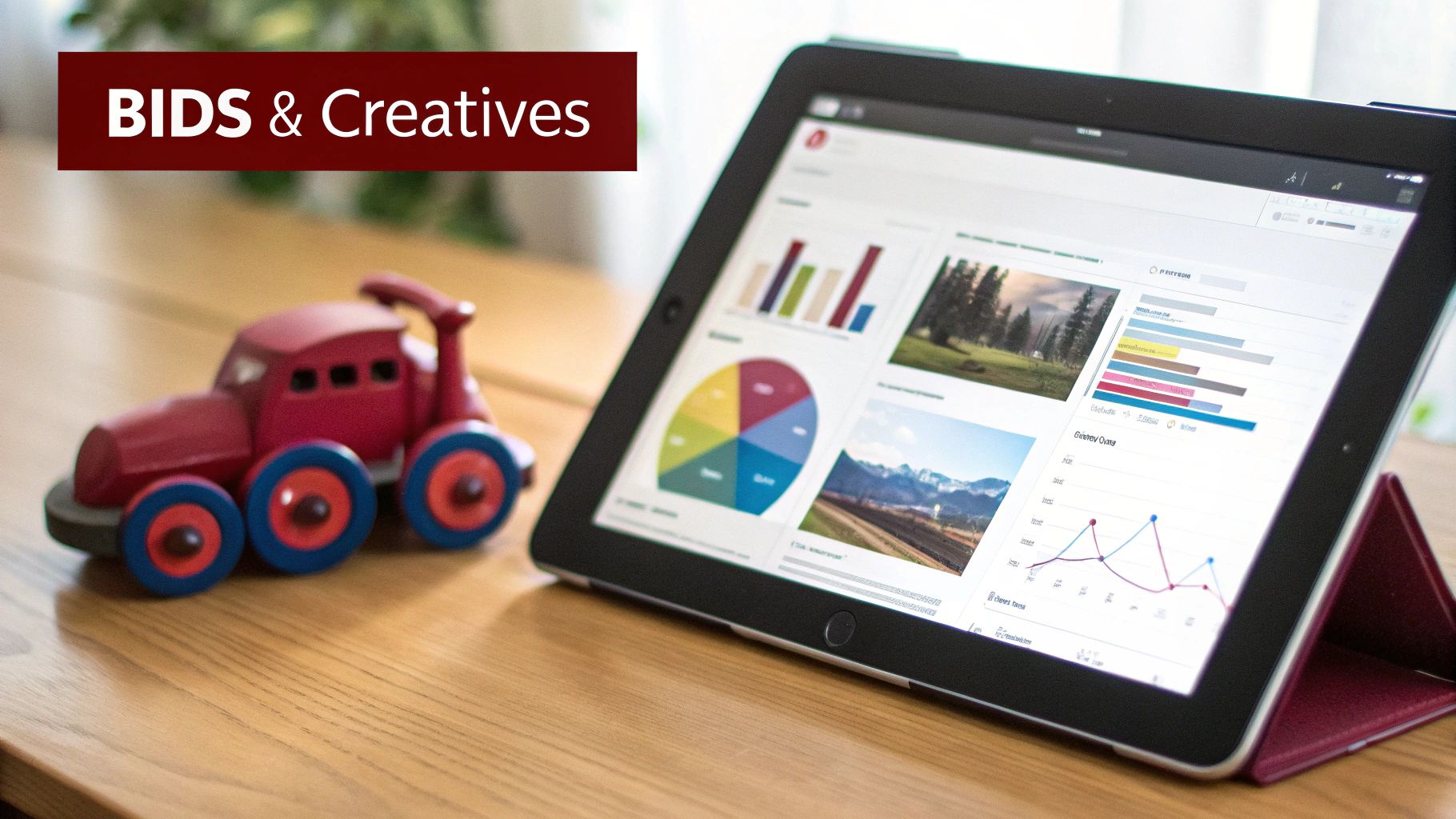
Custom lifestyle imagery almost always outperforms a simple product-on-white photo, driving up click-through rates.
Your testing plan should always be active. Here are a few ideas:
- Imagery: Test a lifestyle shot of a child playing with your toy against a clean, studio shot of the product.
- Video: For Sponsored Brands Video, try a short, 15-second action clip versus a longer, 45-second video explaining the toy's educational benefits.
- Headlines: Write headlines for different shoppers. Test a benefit-driven headline like "The Perfect STEM Gift for Curious Kids" against a more direct one like "Hours of Creative Fun for Ages 6+."
The ad creative grabs their attention, the headline solves their problem, and your optimized product page closes the sale.
Performance and Profitability
In the toy market, you can't improve what you don't measure. A winning Amazon PPC for toys and games operation requires looking beyond surface-level metrics like impressions and clicks. Real profitability is found in the data, but you have to know which numbers matter.
Effective performance measurement connects your ad spend to your overall growth, ensuring your advertising budget is an investment, not an expense.
1. Key Metrics
For toy sellers, a few key performance indicators (KPIs) reveal the health of your account. Focusing on these helps you make smart, data-backed decisions.
Advertising Cost of Sale (ACoS): The classic metric showing the percentage of sales spent on ads. It's a direct measure of campaign efficiency. A low ACoS on a mature toy is great, but don't worry about a high ACoS during a new product launch; it's often a necessary cost.
Total Advertising Cost of Sale (TACoS): This measures your ad spend against your total revenue (organic and ad-driven). This number shows the true impact of your PPC campaigns on organic sales. A declining TACoS over time is ideal; it means your ads are successfully boosting your organic rank and overall sales velocity.
Conversion Rate (CVR): This tells you what percentage of clicks become sales. A great click-through rate with a low CVR is a red flag. It usually points to an issue on your product detail page, such as poor images, confusing bullet points, or uncompetitive pricing.
Your TACoS is the ultimate health metric for your Amazon business. If your ad spend is consistently driving down your TACoS, you’re not just buying sales; you’re building a sustainable brand with a strong organic foundation.
2. Using Reports
Amazon’s ad console is a data goldmine, but the Search Term Report is your most valuable tool for optimization. It shows the exact words shoppers used before clicking your ad. A disciplined weekly review of this report is mandatory.
Here’s how to use it to drive profitability:
Harvest New Keywords: Look for customer search terms that have generated two or more sales. If you aren’t already bidding on these in an exact match campaign, move these proven winners into their own campaigns where you can control their bids precisely.
Find Negative Keywords: Just as important is finding what's not working. Identify search terms that get clicks but zero sales. These are budget drains. Add them as negative exact match keywords to stop your ads from showing for those irrelevant queries.
This cycle of harvesting and negating is a constant refinement loop. It plugs budget leaks and focuses your ad spend on terms with a real chance of converting. This practice is a cornerstone of our Amazon product ranking service, as it directly sharpens ad relevance and fuels sales velocity.
3. PPC Health Check
Consistency is key. A regular account check-in prevents small issues from becoming major problems. Whether weekly or monthly, your health check should be a structured process.
A recent analysis showed that the U.S. toys and games market grew by 6 percent in dollar sales in the first half of the year, signaling strong consumer demand. This growth underscores the need for a disciplined PPC approach to capture this spending while keeping costs in check. You can read more about these commerce trends in the toy industry.
Here’s a simple checklist to guide you:
Weekly Check-In (30 minutes):
- Glance at overall ACoS and TACoS trends. Are they moving in the right direction?
- Check campaign budgets. Are any top performers running out of budget too early?
- Review the Search Term Report for the last 7 days. Add at least 5-10 new negative keywords.
- Spot any ASINs or keywords with high spend and zero sales. Slash their bids or pause them.
Monthly Review (1-2 hours):
- Analyze performance by campaign type. How do your Sponsored Products, Brands, and Display campaigns compare?
- Evaluate your TACoS over the last 30 days. Is your advertising creating a halo effect on organic sales?
- Identify your top 10 performing ASINs. Can you increase their budget or expand keyword targeting?
- Pinpoint underperformers. Is it a conversion issue on the detail page or a targeting problem?
This structured approach turns performance measurement from a reactive task into a proactive strategy for scaling your toy and game business profitably on Amazon.
Frequently Asked Questions
What is a good ACoS for a new toy launch?
For a brand new toy, a "good" ACoS will feel uncomfortably high. During the critical launch window of the first four to six weeks, it's not unusual to see your ACoS between 40% and 100%. This is especially true in crowded subcategories like action figures or educational games. The goal isn't profit; it's about buying data, sparking sales velocity, and getting the first crucial reviews.
Think of it as an investment in your organic rank. After this initial period, you can methodically reduce your bids to bring ACoS down to a more sustainable level, typically in the 20-35% range for established toys.
How do I adjust my PPC strategy for a toy with wide age appeal?
If you're selling a toy suitable for a three-year-old and a seven-year-old, you must segment your campaigns. Lumping everyone together wastes ad spend.
Create separate ad groups, or even separate campaigns, that target the different ways people search for each age group. For example, with magnetic tiles, one ad group would target "toddler building toys" and another would target "STEM toys for elementary kids."
Your creatives should also be segmented. A Sponsored Brands video for the toddler group should show toddlers playing, while the ad for older kids should feature them building more complex structures. This makes the ad more relevant. By splitting them up, you can see which demographic converts better and shift your budget accordingly.
Should I bid on my own brand name in the Toys and Games category?
Yes, absolutely. In the toy category, bidding on your own brand name is a defensive necessity, not a vanity play.
If you don't, your competitors will. They are bidding on your brand terms to peel off your customers right before they buy. Running a branded campaign secures the prime real estate at the top of the search results. It ensures that when someone searches for you, they find you, not a competitor.
These campaigns are almost always your most efficient, with high conversion rates and very low ACoS. It's a small price to pay to protect your brand and prevent sales leakage.
How do I compete with major brands on a limited budget?
Trying to outbid giants like LEGO or Hasbro on broad keywords will exhaust your budget quickly. Focus on niches they ignore.
Concentrate on long-tail keywords where competition is lower and clicks are cheaper. Instead of competing for "building blocks," you can quietly dominate a term like "magnetic building blocks for travel."
Make your product's unique selling point the focus of your ad copy and A+ Content. Also, use creative targeting. Use Sponsored Display to appear on the product pages of complementary items. If you sell custom capes for action figures, target the ASINs of the most popular figures. This lets you leverage the traffic of major brands without entering a bidding war you can't win.
For a deeper dive into building a full-funnel strategy, you can learn more about our comprehensive Amazon services.