
Amazon Vendor Central is an invite-only platform where brands act as direct suppliers to Amazon. Instead of selling products to individual customers, you sell them in bulk to Amazon, which then lists them with the trusted "Sold by Amazon" tag.
Amazon manages the entire retail process, from inventory storage and shipping to customer service and returns, making you a first-party (1P) partner.
The First-Party (1P) Relationship
Vendor Central operates like a traditional wholesale relationship but on Amazon's scale. You are the supplier, and Amazon is your largest retail customer. This is a first-party (1P) model.
Your daily operations shift from managing individual customer orders to fulfilling large purchase orders (POs) from Amazon. Once Amazon receives your inventory, it owns the product, sets the retail price, and controls the entire customer experience.
1. Who Is Vendor Central For?
Vendor Central is designed for established manufacturers and large brands that want a wholesale relationship with Amazon.
Amazon typically invites major brands, often with annual sales exceeding $20 million, and suppliers in categories where supply chain control is critical, like grocery and consumer packaged goods (CPG). You can find more details on this B2B model in our post on Amazon wholesale for business.
The key distinction: In Vendor Central, Amazon is your customer. In Seller Central, the end consumer is your customer. This difference affects everything from cash flow and pricing to daily operations.
Vendor Central is best suited for businesses with proven capabilities in:
- Bulk Shipments: Efficiently moving large, palletized orders.
- Operational Precision: Meeting Amazon's strict deadlines for packaging and shipping to avoid penalties.
- High-Volume Production: Consistently having enough stock to meet Amazon’s large demand forecasts.
Understanding this difference is the first step for any brand considering its options. It’s less about direct-to-consumer marketing and more about being a reliable, high-volume supplier. For more on how these relationships are evolving, see Carbon6.io's breakdown of Amazon's vendor platform.
The Vendor Central Operational Flow
The rhythm of Vendor Central is dictated by large, periodic Purchase Orders (POs) from Amazon. This is a wholesale operation where supply chain management and operational accuracy are paramount.
The process begins when Amazon’s algorithm forecasts demand and sends you a PO detailing the products and quantities needed. Your job is to fulfill that order quickly and precisely.
1. From Purchase Order to Payment
Once a PO is received, the process must be flawless. Any misstep can result in financial penalties known as chargebacks.
Here’s the typical operational cycle:
- PO Confirmation: You review and confirm the PO in the Vendor Central portal, ensuring you have the stock to meet the required delivery date.
- Shipment Preparation: You pick, pack, and label the bulk shipment according to Amazon's very strict guidelines, which cover everything from box sizes and label placement to pallet configurations.
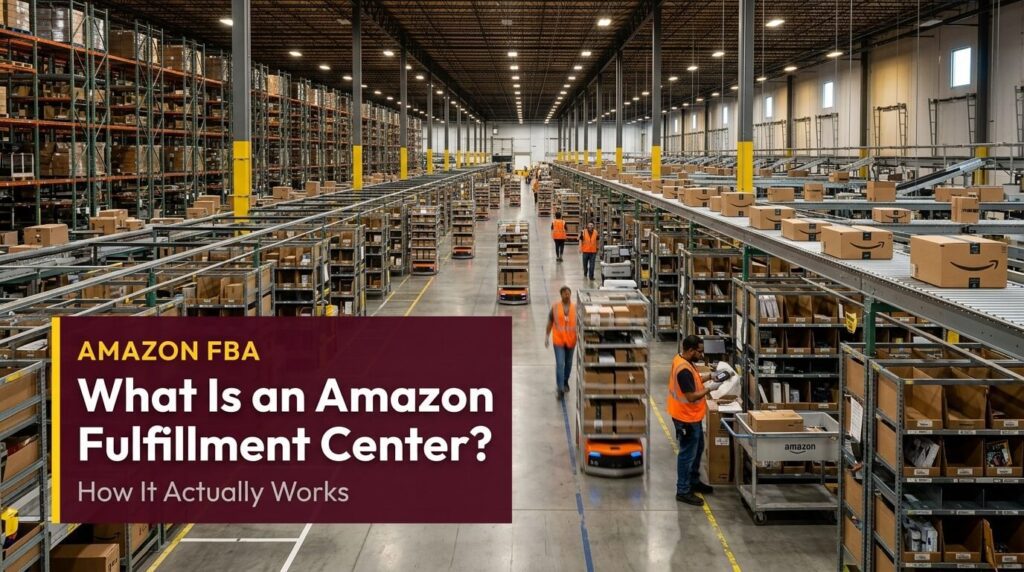
- Shipping to Amazon: The prepared shipment is sent to the designated Amazon Fulfillment Center. Hitting the delivery window is mandatory; shipping too early or too late can trigger a chargeback. For more details, read our post on how to send products to Amazon.
- Invoicing: After Amazon processes the inventory, you submit an invoice through the portal. Payment is typically received in 30, 60, or even 90 days, depending on your terms.
Success in Vendor Central isn't measured by customer reviews but by your operational scorecard. Your PO Fill Rate (the percentage of an order you ship) and On-Time Delivery Rate are your most important metrics.
This workflow requires a highly organized logistics operation. If your company excels at manufacturing and supply chain management, the vendor model can drive significant growth. However, be prepared to invest in your warehouse processes to avoid costly non-compliance fees.
Vendor Central vs Seller Central
Choosing between Vendor Central and Seller Central is a strategic business decision. It's not just about a different interface; it changes your entire business model.
Simply put: as a vendor, you sell to Amazon. As a seller, you sell to the end consumer.
This single difference impacts every aspect of your operation, from pricing control to payment schedules.
1. Vendor vs Seller at a Glance
This table provides a high-level comparison of the two platforms and their major trade-offs.
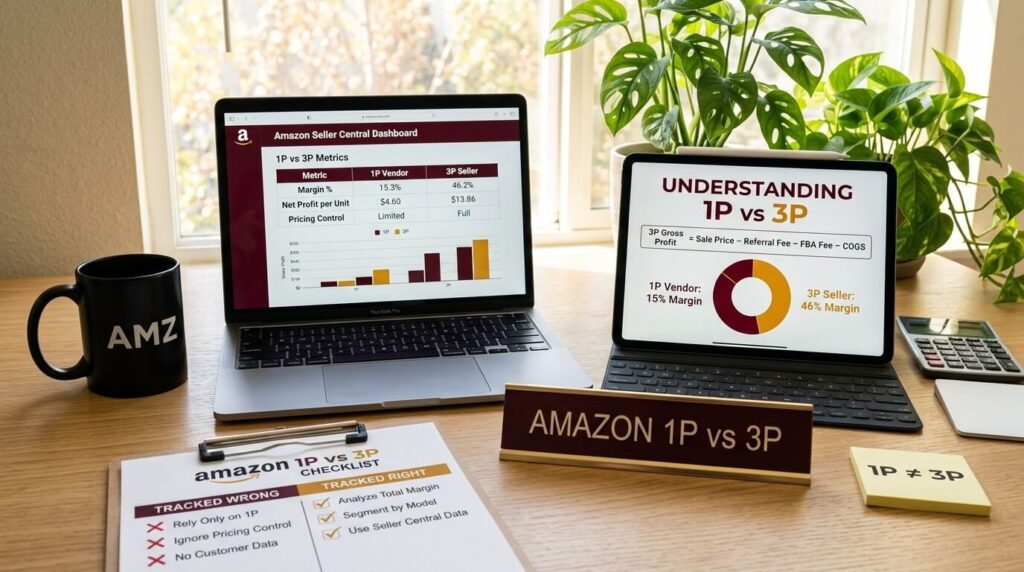
| Feature | Amazon Vendor Central (1P) | Amazon Seller Central (3P) |
|---|---|---|
| Business Model | Wholesale: You sell to Amazon. | Marketplace: You sell through Amazon. |
| Who is the Customer? | Amazon Retail | End Consumers |
| Pricing Control | Amazon sets the retail price. | You have full control over your pricing. |
| Inventory Management | Fulfill large Purchase Orders (POs) from Amazon. | Manage your own inventory, often using FBA. |
| Logistics Focus | Bulk shipments to Amazon's fulfillment centers. | Individual order fulfillment (FBM) or sending stock to FBA. |
| Payment Terms | Standard wholesale terms (60-90+ days). | Paid every two weeks. |
| Prime Badge | "Ships from and sold by Amazon.com" | "Fulfilled by Amazon" (if using FBA) |
| Marketing Tools | Access to exclusive programs like Amazon Vine. | Robust self-service advertising and brand tools. |
| Operational Focus | Supply chain efficiency and PO compliance. | Direct-to-consumer marketing, inventory, and customer service. |
The path you choose defines your daily tasks and long-term strategy on Amazon.
2. Control and Pricing
The most significant trade-off is control. As a vendor, you sell your product to Amazon at a wholesale price and give them control over retail pricing. Amazon's algorithms adjust prices based on market competition and their own profit targets.
For example, you might sell a product to Amazon for $10, expecting a $20 list price. Amazon could sell it for $18 one day and $14 the next to win the Buy Box, and you have no say.
Sellers, however, maintain complete pricing authority. You set your retail price, run promotions, and react to competitors in real-time. This flexibility is essential for brands that must maintain consistent pricing across all sales channels.
3. Logistics and Operations
The operational demands of each platform are completely different.
- Vendor Central: Your focus is on supply chain excellence. Success depends on preparing large, periodic purchase orders and meeting delivery windows to Amazon's fulfillment centers.
- Seller Central: You are responsible for getting products to individual customers. You can handle fulfillment yourself (Fulfilled by Merchant or FBM) or use Fulfillment by Amazon (FBA), where you send inventory to Amazon for storage, packing, and shipping.
4. Financial and Marketing Differences
The financial models are also distinct. Vendors operate on traditional wholesale payment terms, often waiting 60 to 90 days for payment.
Sellers using FBA are paid every two weeks. For businesses where cash flow is critical, this is a significant advantage.
Marketing tools also vary. While both platforms offer powerful advertising options, vendors gain exclusive access to programs like Amazon Vine, which helps generate early product reviews from trusted reviewers.
There's much to consider when choosing. For a deeper analysis, see our complete comparison of Amazon Vendor Central vs Seller Central. The right choice depends on your brand's operational strengths, financial position, and goals.
The Pros and Cons of Vendor Central
Choosing Vendor Central is a major strategic decision. You trade significant control for immense scale.
The appeal is clear. Your products instantly gain the "Sold by Amazon" badge, a powerful symbol of trust for shoppers that can improve conversion rates. Your logistics also simplify, as you shift from managing thousands of individual orders to filling large, predictable purchase orders for Amazon.
1. Vendor Model Advantages
For brands with strong manufacturing and supply chain operations, Vendor Central provides access to exclusive, high-impact marketing programs.
- A+ Premium Content: This invite-only feature allows you to enhance product pages with integrated videos, interactive hotspots, and comparison charts. Effective e-commerce video production strategies can maximize its impact.
- Amazon Vine: This program helps you get new products to Amazon's most trusted reviewers before launch, providing a head start on gathering early reviews.
- Simplified Operations: Your focus is on keeping one customer, Amazon, happy. This means managing bulk shipments and invoices instead of individual customer service issues.
2. Significant Downsides and Risks
These benefits come at the cost of control and increased financial pressure. The biggest challenge is relinquishing control over your product's retail price. Amazon's algorithm can change prices at any time, potentially causing price erosion across all your sales channels.
Payment terms are another major hurdle. While sellers are paid every two weeks, vendors often wait 60 or 90 days for payment. This delay can strain cash flow for a growing business.
Amazon's chargeback system is complex and strict. Minor operational errors, like a late shipment or a misplaced label, can trigger automatic financial penalties deducted directly from your payment.
Recent data highlights this high-pressure environment. One study showed that while 77% of vendors see their Amazon growth outpace their category average, Amazon also demands an average cost price reduction of 6.25% annually. The same report found that 40% of vendors faced punitive actions during negotiations. You can learn more about these vendor negotiation dynamics in the full survey. This constant pressure on margins is a reality every brand on Vendor Central must anticipate.
Vendor Central Fees and Payment Terms

In Vendor Central, your profit isn't just your wholesale price minus the cost of goods. Amazon includes a variety of fees and allowances in your contract, which are deducted automatically before payment.
For new vendors, these deductions can be an unwelcome surprise that disrupts cash flow forecasts. Understanding this financial structure is essential before accepting an invitation.
1. Common Fees and Allowances
Amazon often refers to these fees as "allowances" to cover its marketing and operational costs. Some are standard, but many are negotiable. Knowing how to negotiate with suppliers is a valuable skill when Amazon is your customer.
Common deductions include:
- Marketing Co-op Fees: A percentage of your sales (typically 2% to 10% or more) that Amazon reinvests in marketing your products.
- Freight Allowance: A fee to cover shipping costs from Amazon's warehouses to the customer.
- Damage Allowance: A flat percentage to cover products damaged in Amazon's warehouses or during shipping.
- Chargebacks: Financial penalties for failing to follow operational rules, such as shipping late, using incorrect labels, or packing boxes improperly.
The amount on your invoice is rarely the amount deposited into your bank account. You must subtract all potential deductions from your wholesale price to determine your true net profit.
2. Payment Terms and Cash Flow
Beyond fees, the payment cycle is a significant consideration. Unlike the bi-weekly payouts in Seller Central, vendors operate on traditional wholesale net terms.
You'll be paid in Net 30, 60, or even 90 days after Amazon processes your invoice. This long wait can strain your cash flow, especially if you need capital to manufacture new inventory. It's a critical factor to include in your financial planning.
Additionally, maintaining a clear financial overview is important. Seeking comprehensive UK tax advice for small businesses can help ensure your financial planning is both solid and compliant.
Your Vendor Central Scorecard
As a vendor, Amazon views you as a supplier. The data in Vendor Central reflects your performance as a wholesale partner. Your success is measured by how reliably you supply Amazon’s fulfillment network.
Your operational scorecard is what Amazon uses to assess your dependability. The metrics on this scorecard directly influence the size and frequency of your purchase orders.
1. Core Performance Metrics
Your Vendor Central dashboard contains a lot of data, but a few key performance indicators (KPIs) are most important. Focusing on these will give you the clearest view of your account's health.
The most critical metrics are:
- Fill Rate: The percentage of a purchase order you successfully fulfill. A low fill rate indicates you can’t meet Amazon's demand.
- Shipped Revenue vs. Ordered Revenue: This metric shows the dollar value of your fulfillment gaps, highlighting revenue lost because you couldn't ship what Amazon ordered.
- Out-of-Stock Rate: This tracks how often your products are unavailable for purchase. High out-of-stock rates can hurt short-term sales and damage your product's long-term organic ranking.
These metrics are direct indicators of your operational efficiency. A consistently high fill rate and low out-of-stock rate build Amazon's confidence in your brand, leading to better forecasting and larger POs.
Deeper analysis of reports allows you to connect performance data. You can track KPIs like Customer Returns, Inventory Sell-Through Rate, and Promotional ROI. The Sales Diagnostic report provides up to three years of daily traffic data by ASIN, revealing conversion rates to inform content and pricing decisions. Alloy.ai offers a great rundown of leveraging vendor metrics for more insight.
You can also use data from tools like Amazon Brand Analytics to better understand customer behavior and market trends, connecting your operational performance to activity on the digital shelf.
Frequently Asked Questions
1. Is Vendor Central Invite-Only?
Yes, Vendor Central is a strictly invitation-only program. There is no application process. Amazon's vendor managers identify and contact brands that are successful on Seller Central, are established leaders in their industry, or stand out at major trade shows.
2. Can I Use Both Vendor and Seller Central?
Yes, operating a hybrid model is a smart strategy. Many successful brands use both platforms to maximize their presence on Amazon.
A common approach is to sell core, high-volume products through Vendor Central to get the "Sold by Amazon" badge and use Amazon's logistics network. At the same time, you can use Seller Central to launch new products, sell niche items with higher margins, or maintain full price control over specific ASINs.
3. What Is the Biggest Challenge for New Vendors?
The single biggest challenge for new vendors is operational compliance. Success depends on precise execution, not marketing. Amazon has extremely strict guidelines for everything, from labeling cartons and packaging products to meeting tight shipping windows for purchase orders.
Mistakes result in chargebacks, which are penalties deducted directly from your invoice payments. These fees can accumulate quickly. A highly efficient and accurate supply chain is essential for success as a vendor.