
Reselling on Amazon is sourcing products that already exist, already have demand, and already have search volume, then listing them under existing product pages to generate profit from the margin between your buy price and your sell price. You are not creating a brand. You are not designing packaging. You are finding products that move, buying them at a lower cost than Amazon’s current going price, and competing for the Buy Box.
This model attracts sellers at every experience level because the barrier to entry is lower than private label, the product validation is already done by the market, and you can start generating cash flow within weeks. But lower barriers also mean more competition, thinner margins, and a harder fight.
When you resell, you join other sellers on a shared product listing. The listing already has a title, bullet points, images, and customer reviews. Your job is to win the Buy Box, which is the purchase button that approximately 83% of Amazon sales flow through, price competitively, and maintain account health to keep selling.
The three dominant forms of reselling on Amazon are retail arbitrage, online arbitrage, and wholesale. Each has different sourcing channels, scalability and risk factors.
Amazon Reselling Market Snapshot
Amazon’s third-party marketplace continues to grow, with independent sellers now moving the majority of units on the platform. These figures give you a realistic picture of what resellers are actually earning, spending to start, and converting.
- Third-party sellers generated over $140 billion in revenue in 2024
- Independent sellers account for roughly 60% of all units sold on Amazon
- Full-time resellers typically generate between $50,000 and $250,000 in annual revenue
- Profit margins range from 10% to 30% depending on sourcing method and category
- Wholesale resellers average 10% to 15% net margins
- Arbitrage sellers regularly see 25% to 40% ROI per unit on strong deals
- 37% of Amazon resellers started with less than $500 in capital
- Only about 3% of active seller accounts scale past $1 million in annual sales
Main Reselling Models on Amazon
Each reselling model on Amazon has different startup costs, sourcing time, and scalability. Here is how they break down.
1. Retail Arbitrage
Retail arbitrage is buying discounted or clearance products from physical retail stores, Walmart, Target, Home Depot, TJ Maxx, Big Lots, and similar chains, and reselling them on Amazon at full or near-full price.
You walk into a store, scan barcodes with Amazon’s Seller app or a third-party scanning app like Scoutify, check the current Amazon price and your estimated profit after fees, and decide whether the deal makes sense. If a product retails clearance at $8 and sells on Amazon for $22, and your fees plus shipping come to $9, you are looking at roughly $5 in profit per unit.
2. Online Arbitrage
Online arbitrage follows the same logic as retail arbitrage but sources products from online retailers instead of physical stores. You buy from websites like Walmart.com, Target.com, Kohls, Walgreens, Best Buy, or any retailer running promotions, then resell on Amazon.
Tools like Tactical Arbitrage, SourceMogul, and Keepa are central to this model. Tactical Arbitrage scans thousands of product pages across hundreds of retailer websites and cross-references their prices against current Amazon selling prices, doing in minutes what would take hours manually.
The advantage of online arbitrage is that it scales better than retail arbitrage because you are not limited by geography or store hours. The risk is that Amazon’s marketplace reacts fast, and deals that look profitable today can become unprofitable within 48 hours if multiple sellers spot the same opportunity.
3. Wholesale Reselling
Wholesale reselling means buying products directly from brands, or authorized distributors in bulk at wholesale pricing, then reselling on Amazon at retail price. You are purchasing legitimate inventory through official channels, which means you have invoices that satisfy Amazon’s authenticity requirements and can often get ungated in restricted categories.
Wholesale margins are thinner than arbitrage, typically 10% to 20% gross, but volume is higher and sourcing is far more repeatable. Once you have a working relationship with a brand or its distributor, reordering takes a phone call or a website login.
The challenge with wholesale is that many good products are already being sold on Amazon by dozens of other resellers, including sometimes the brand itself. Getting into strong wholesale accounts with products that are not yet oversaturated requires genuine relationship building and persistence.
4. Dropshipping
Dropshipping on Amazon is listing products without holding inventory and having a third-party supplier ship directly to the customer when an order comes in. Amazon allows dropshipping but only if the seller of record is you on every packing slip, invoice, and external packaging. Using a retail website to fulfill Amazon orders violates Amazon’s dropshipping policy and has resulted in account suspensions.
Most experienced resellers move away from dropshipping because margins are thin, control over shipping speed and packaging is low, and Amazon’s delivery expectations have become harder to meet without your own inventory position.
Setting Up Your Amazon Seller Account for Reselling
Amazon offers two account types. The Individual plan charges $0.99 per unit sold. The Professional plan charges $39.99 per month with no per-unit fee. Any seller moving more than 40 units per month saves money on the Professional plan, which also unlocks bulk listing, advertising access, and eligibility for the Buy Box.
Every reseller should start with a Professional account if they are serious about building a real business. The Buy Box eligibility alone makes it worth the fee, and most approved selling categories require it.
After creating your account, you will need:
- A business name and address
- Bank account for deposit
- Credit card for fees
- Government-issued ID for identity verification
- Tax information (SSN or EIN)
Amazon has tightened its identity verification process significantly. Many new accounts in 2025 and into 2026 now require video verification through a third-party service called Persona. Provide accurate information and expect the process to take two to five business days.
Amazon’s Fee Structure for Resellers
Amazon Fees directly determine whether your business is profitable or just generating revenue. Many resellers underestimate total fees and price themselves into losses.
1. Referral Fees
Amazon charges a referral fee on every sale, which is a percentage of the sale price including shipping. Referral fees range from 6% in categories like personal computers to 17% in jewelry and beauty. Most everyday categories like home and kitchen, sports, and toys land at 15%. Electronics typically sits at 8%.
2. FBA Fees
If you use Fulfillment by Amazon, which most competitive resellers do because it grants Prime eligibility and Buy Box preference, you pay a per-unit fulfillment fee based on item size and weight.
As of 2026, standard-size FBA fees start at approximately $3.06 for small light items and climb to $6.00 or more for larger standard items. Oversized or bulky items carry significantly higher fees. Amazon updated its fee structure in 2024, adding an inbound placement fee for most FBA shipments, which adds $0.21 to $1.32 per unit depending on whether you send inventory to one location or distribute it across fulfillment centers.
3. Storage Fees
Monthly storage at Amazon fulfillment centers runs approximately $0.78 per cubic foot for standard-size items from January through September and $2.40 per cubic foot from October through December. Long-term storage fees apply after 365 days at $6.90 per cubic foot or $0.15 per unit, whichever is greater.
Inventory that does not turn over is one of the fastest ways to destroy margins in an FBA business. Every slow-moving unit is costing you money every month.
4. Using Amazon’s Revenue Calculator
Amazon provides a free Revenue Calculator tool that gives you estimated fees for any ASIN before you source it. Plug in the product, your buy cost, and your target sell price. The calculator outputs your estimated profit and margin after all fees. Every sourcing decision should run through this tool before you commit capital.
The Buy Box and Why It Runs Your Business
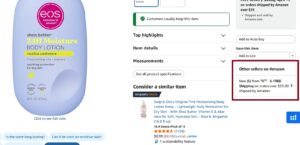
The Buy Box is the “Add to Cart” button on a product page. When multiple sellers list the same product, only one wins the Buy Box at any given time, and that seller receives the overwhelming majority of sales on that listing. Sellers not in the Buy Box can still be found through the “Other Sellers on Amazon” section, but conversion rates there are dramatically lower.
Amazon has never published an exact algorithm for Buy Box eligibility, but based on observable behavior and seller experience, the primary factors are:
- Competitive pricing relative to other sellers on the listing
- Fulfillment method with FBA sellers receiving preference over FBM sellers at similar prices
- Seller account metrics including order defect rate below 1%, late shipment rate below 4%, and pre-fulfillment cancellation rate below 2.5%, and inventory availability.
Price is the heaviest weighted factor among these. Sellers using automated repricers keep prices moving in response to competition without manual monitoring. Tools like Seller Snap, BQool, and Repricer Express use rule-based or algorithmic repricing to maintain Buy Box position without racing to the bottom on price.
How to Source Products for Amazon Reselling
Sourcing determines your margins, your risk, and how fast you can scale. Here are the methods to source your products for reselling.
1. Finding Wholesale Suppliers
The primary channel for finding wholesale suppliers is direct outreach to brands whose products are already selling on Amazon. Look for products with strong sales velocity (use Jungle Scout or Helium 10 to estimate monthly units sold), limited Buy Box competition, and a brand that does not yet sell directly on Amazon or has limited direct presence.
Contact the brand’s sales or wholesale department, introduce yourself as an Amazon reseller, and ask about opening a wholesale account. Most brands have minimum order quantities ranging from $100 to $500 for initial orders. Come prepared with your reseller certificate or business license.
Trade shows like ASD Market Week in Las Vegas or the NY NOW trade show are legitimate sourcing channels where you meet distributors and manufacturers directly, see products in person, and negotiate pricing on the spot.
2. Using Wholesale Directories
Directories like SaleHoo, Worldwide Brands, and Inventory Source aggregate verified supplier contacts. These are starting points, not silver bullets. The best wholesale relationships come from direct outreach, not from lists every other seller on the internet has access to.
3. Retail and Online Arbitrage Sourcing
For retail arbitrage, high-priority store types are those with frequent clearance cycles: Walmart clearance aisles, Big Lots, Marshalls, TJ Maxx, and seasonal clearance at Target. The Seller app or Scoutify app gives you live price and sales rank data while you are standing in the aisle.
For online arbitrage, running Tactical Arbitrage scans on retail categories against your approved selling categories produces a list of potential leads. Each lead requires manual review to verify sales rank trends via Keepa, check for IP complaints against the ASIN, and confirm the current number of competing sellers.
4. Keepa Data Is Non-Negotiable
Keepa is a browser extension and web tool that shows price and sales rank history for any Amazon ASIN going back years. Before sourcing any product, check Keepa to understand:
Whether the sales rank is consistently strong or just a temporary spike. Whether the price has been stable or is in free fall. How many sellers have competed on this listing historically and what happened to price when they arrived. Whether the brand or Amazon itself is selling on this listing, which will affect your ability to compete.
Restricted Categories and Brand Gating
Amazon restricts certain categories and brands and requires approval before you can list products in them. Restricted categories as of 2026 include
- Grocery and gourmet food
- Health and personal care,
- Beauty,
- Topicals,
- Automotive parts,
- Fine jewelry,
- Watches, and
- Streaming media players
Getting approved often requires submitting invoices from a legitimate supplier, passing a product safety review, and in some cases paying a fee. Newer accounts may face additional requirements.
Brand gating is a separate issue. Individual brands can restrict who sells their products on Amazon. If you encounter a brand gate, you will not be able to add the product to your inventory even if the category itself is open.
Before spending capital on a product from a gated brand, verify that you can actually list it. Testing with a single unit purchase before committing to a larger order is standard practice.
Fulfillment Strategy: FBA vs FBM
1. Fulfillment by Amazon
With FBA you can send your inventory to Amazon’s fulfillment centers and Amazon handles picking, packing, shipping, customer service, and returns. Your listings become Prime eligible, which is a major conversion driver. Prime members convert at approximately three to four times the rate of non-Prime customers.
FBA is the default recommendation for most resellers because Buy Box algorithm preference, Prime eligibility, and removal of operational complexity outweigh the additional fees in most cases.
The critical discipline with FBA is inventory management. Sending too much slow-moving inventory results in mounting storage fees and capital tied up in unsellable stock. Sending too little means stockouts, which hurt sales rank and Buy Box consistency.
2. Fulfillment by Merchant
With FBM you store inventory yourself and ship orders directly to customers when they come in. You handle customer service and returns. FBM makes sense for oversized items where FBA fees would destroy margins, for seasonal products where you want to avoid storage fees between peaks, or for products with unpredictable demand where you need more control.
Some high-volume sellers use a hybrid model: FBA for their core catalog and FBM as a backup to maintain the listing during FBA stockouts.
3. Seller Fulfilled Prime
Seller Fulfilled Prime allows FBM sellers to display the Prime badge if they meet strict shipping speed and carrier requirements. Amazon reintroduced SFP in 2023 after pausing the program. It requires a 99% on-time delivery rate, same-day shipping cutoff, and use of approved carriers. Most small resellers find the operational requirements too demanding, but high-volume sellers with strong logistics infrastructure use SFP strategically.
Pricing Strategy for Reselling
The first calculation every reseller needs to run is minimum viable price. Take your unit cost, add all Amazon fees (referral fee, FBA fee, storage estimate), add a buffer for returns and damaged goods, and add your target margin. That number is your floor. You should not sell below it regardless of competitive pressure.
Automated repricing in Seller Central keeps you in Buy Box contention without constant manual attention. Set a minimum price (your floor) and a maximum price (what the market will bear) and let the repricer adjust within that range. The risk of aggressive repricing is a race to the bottom when multiple sellers use the same tool with similar settings.
Inventory Management and Cash Flow
Cash flow is the most common killer of otherwise viable reselling businesses. You spend money on inventory before you receive money from sales, and FBA adds a processing lag between when your inventory arrives and when it becomes available to sell.
Standard FBA check-in time currently runs two to seven business days for most shipments, though peak season (October through January) can extend this significantly. Plan your inventory cycles around this lag.
Calculate your inventory turnover rate for every product you carry. A product selling 50 units per month with 100 units in stock has a two-month turnover. A product selling 10 units per month with 200 units in stock has a twenty-month turnover. Long turnover cycles tie up capital and generate storage fees. Resellers who maintain sixty to ninety day turns on their best sellers and quickly liquidate or remove slow movers operate with far more financial flexibility than those who let inventory age.
Reorder points matter. The standard formula is: (average daily sales x lead time in days) + safety stock. If a product sells 5 units per day and your supplier takes 14 days to deliver plus 5 days for FBA check-in, your reorder point is (5 x 19) + 15 units of safety stock = 110 units in reserve.
Amazon’s IP Complaint and Authenticity Policies
Brands can file intellectual property complaints against resellers even when the reseller purchased authentic products through legitimate retail channels. The complaint types include patent infringement, trademark infringement, and counterfeit claims. Amazon’s default response to an IP complaint is to remove the listing and potentially suspend the seller’s account, and the burden falls on the seller to prove authenticity.
The standard protection for wholesale resellers is clean invoices from legitimate suppliers. Invoices must show the supplier’s name and contact information, a clear product description matching the ASIN in question, the quantity purchased, and the purchase price. Amazon’s verification team scrutinizes these documents closely. Invoices that look generated or that come from suppliers Amazon cannot verify will not satisfy a complaint.
For retail arbitrage sellers, retail receipts are generally not accepted as proof of authenticity for IP complaints because they do not prove product origin in the way a wholesale invoice does. This is one of the reasons wholesale reselling carries less account risk than arbitrage in categories prone to IP issues.
Tools Resellers Actually Use
1. Helium 10
Helium 10 provides a suite of tools for Amazon sellers including product research (Black Box), keyword research (Cerebro, Magnet), listing analysis, and profitability tracking. For resellers, the most useful tools are Black Box for finding high-demand product categories and the Profits dashboard for tracking real margin after fees.
2. Jungle Scout
Jungle Scout’s product database and sales estimator are widely used to validate demand before sourcing. The Chrome extension shows estimated monthly sales on any product page. Sales estimates are approximations, not guarantees, but they are accurate enough to be directionally useful for sourcing decisions.
3. Keepa
Keepa is the single most important data tool for any reseller. Price history, sales rank history, Buy Box ownership over time, and the number of active offers are all visible in Keepa’s graphs. A product that looks profitable today but has seen price collapse every time more than five sellers joined the listing will likely repeat that pattern.
4. Tactical Arbitrage
Tactical Arbitrage is the primary tool for online arbitrage sourcing. It scans retail websites and matches products to Amazon listings, calculating potential profit after fees. It requires a monthly subscription and some learning curve but dramatically reduces the time needed to find viable arbitrage leads.
5. Inventory Lab
Inventory Lab combines inventory tracking, shipment creation for FBA, and profit and loss reporting in a single dashboard. Many full-time resellers use it as their primary accounting and shipment management tool because it integrates directly with Amazon Seller Central.
Is Amazon Reselling Worth It in 2026
Reselling on Amazon in 2026 is more competitive than it was few years ago, and it is also more systematized. The tools available to source, analyze, and manage inventory are better than they have ever been. The fee structure is more complex, which means sellers who understand it have a real edge over those who do not.
The business model works when you approach it with the same rigor you would apply to any real business: understand your numbers, protect your account, build supplier relationships, and treat inventory decisions as capital allocation decisions. It does not work as a passive income play or a side hustle you check once a week.
Sellers who treat reselling as a skill to be developed rather than a system to be gamed build durable, profitable operations. The ones who look for shortcuts get hit by fee changes, brand gates, or account problems and exit the market. The opportunity remains real and substantial. What changes year over year is the work required to capture it.
Frequently Asked Questions
Do I need a business license to resell on Amazon?
A business license is not technically required by Amazon to create a seller account, but most wholesale suppliers will ask for a business license or reseller certificate before opening an account with you. Forming an LLC and getting a state-issued reseller permit is the standard setup for resellers sourcing from wholesale channels.
Can I resell any product I buy at a store?
You can resell most products purchased through legitimate retail channels, but certain brands have gated their products on Amazon and certain categories require approval. Checking whether a product is restricted before purchasing inventory is essential. The Amazon Seller app lets you scan any barcode and shows whether you are eligible to list that item on your account.
How much money do I need to start reselling on Amazon?
Retail arbitrage can technically start with a few hundred dollars. Online arbitrage typically requires $500 to $2,000 to build enough initial inventory to generate meaningful revenue. Wholesale reselling generally requires $2,000 to $10,000 to meet supplier minimums and maintain enough inventory depth to compete effectively.
What is the difference between retail arbitrage and wholesale reselling?
Retail arbitrage means buying products from retail stores at discounted prices and reselling at higher prices. Wholesale reselling means purchasing directly from suppliers at wholesale prices and selling at retail. Wholesale is more scalable and carries less account risk from IP issues, but requires more capital and supplier relationships. Retail arbitrage requires less capital but is harder to scale and more time-intensive to source.
How does the Amazon Buy Box work for resellers?
The Buy Box is the primary purchase button on a product listing. Amazon allocates it based on a combination of price, fulfillment method, seller metrics, and availability. FBA sellers receive preference over FBM sellers at comparable prices. Having a Professional seller account is a prerequisite for Buy Box eligibility. Multiple sellers can share Buy Box rotation when their metrics are comparable, meaning Amazon shows different sellers at different times.
Can a brand stop me from selling their products on Amazon?
Yes. Brands enrolled in Amazon Brand Registry can request gating that requires sellers to obtain authorization before listing. Brands can also file IP complaints that remove listings even when the seller purchased authentic products. Wholesale resellers with proper supplier invoices have more protection than arbitrage resellers using retail receipts when responding to complaints.
Is Amazon FBA required for reselling?
FBA is not required, but it provides significant advantages including Prime eligibility and Buy Box preference. Many resellers use FBM for oversized or slow-moving products and FBA for their core catalog. Starting with FBA is the common approach for new resellers because it simplifies logistics and maximizes visibility.
How long does it take to become profitable reselling on Amazon?
Retail and online arbitrage sellers can see profitability in the first one to two months if they source correctly. Wholesale resellers typically take two to four months to establish supplier accounts, place initial orders, send inventory to FBA, and start seeing consistent sales. The time to meaningful income depends heavily on starting capital and how much time is invested in sourcing and optimization.