
What Is Amazon Brand Registry
Amazon Brand Registry is a free program by Amazon that gives trademark owners a set of tools to protect their brand, control product listings, and access advanced marketing features. Over 700,000 brands have enrolled since the program launched, and sellers who register report up to a 99% success rate when filing intellectual property complaints through the platform. If you sell branded products on Amazon, enrollment is a must.
Without Brand Registry, sellers lose control over their own product detail pages. Hijackers can alter titles, swap images, and attach themselves to listings they have no right to sell on. Registered brands get priority when it comes to listing ownership, content editing, and access to programs like A+ Content, Sponsored Brands, Amazon Vine, and the Brand Referral Bonus.
1. How the Program Works
You submit your trademark details through the Brand Registry portal at brandregistry.amazon.com. Amazon cross-references your trademark with the relevant government trademark database. If everything matches, Amazon sends a verification code to the contact listed on the trademark record. You provide that code back to Amazon, and enrollment is approved, typically within one to two weeks.
2. Who Can Enroll
Brand owners, manufacturers, and authorized agents can enroll. You do not need to be a seller on Amazon to register. Vendors, sellers, and even brand owners who use third-party fulfillment all qualify. The only hard requirement is a qualifying trademark.
3. Registry vs. Reseller Status
Unregistered sellers operate as generic third-party sellers with no listing authority. Registered brand owners get the ability to update listing content, report violations, and access exclusive advertising and content features. The difference in listing control alone makes enrollment worth it, but the additional tools and protections push it from “useful” to “necessary.”
Amazon Brand Registry Requirements
The requirements for Brand Registry have gone through several updates. As of 2026, here is exactly what you need before starting an application.
1. Active Registered Trademark
You must have a trademark that is registered (not just filed) with an accepted trademark office. Amazon accepts trademarks from over 30 trademark offices globally, including the United States Patent and Trademark Office (USPTO), European Union Intellectual Property Office (EUIPO), UK Intellectual Property Office (UKIPO), Canadian Intellectual Property Office (CIPO), Japan Patent Office (JPO), and the World Intellectual Property Organization (WIPO) among others.
The trademark must be text-based (a word mark) or an image-based mark that contains words, letters, or numbers. Design-only trademarks without any text element are not accepted.
Amazon also accepts pending trademarks through the IP Accelerator program, which connects sellers with vetted IP law firms. Brands enrolled via IP Accelerator get early access to Brand Registry tools before the trademark is fully registered, which can save 8 to 14 months of waiting time in countries like the United States where USPTO processing timelines remain lengthy.
2. Trademark Must Be on Products
The registered trademark must appear physically on your products or packaging. During the application, Amazon asks for images showing the brand name on the product, packaging, or labeling. If your trademark does not visibly appear on what you sell, the application will be rejected.
3. Amazon Account Requirement
You need an active Amazon account, either a Seller Central account or a Vendor Central account. You can also enroll without a selling account, but you will need one to actually use the tools. A Professional Seller account costs $39.99 per month. Individual accounts can enroll in Brand Registry, but many tools like Sponsored Brands and A+ Content require a Professional plan.
4. Verification Process
Amazon uses a verification code sent to the trademark office’s contact address on file. This is typically the trademark attorney’s email or the mailing address listed on the trademark record. If your trademark attorney is unresponsive or no longer in practice, this step can cause delays. Update your trademark contact information before applying.
5. Additional Documentation
Amazon may request supplemental documents such as product images, invoices, or authorization letters if there is any ambiguity around ownership. Having a clear chain of ownership documentation ready before applying speeds up the process.
Complete Application Process
Getting through Brand Registry approval without delays requires preparation. Here is the step-by-step process as it works in 2026.
1. Prepare Your Trademark
Confirm your trademark is fully registered (status “Registered” or equivalent) by checking the relevant trademark office’s online database. For USPTO, search at tsdr.uspto.gov. Note your registration number, trademark text, and the goods/services classes your mark covers. You will also need trademark registration certificate to upload during the application process.
2. Access the Portal
Go to Amazon brand registry portal and log in with your Amazon credentials. Click “Enroll a new brand.” If you manage multiple brands, each one needs its own separate enrollment.
3. Fill Brand Information
Enter your brand name exactly as it appears on the trademark registration. Select the trademark office where it is registered. Enter the registration number. Enter 1-3 ASINs that represent your brand. The brand name on the application should match the brand name on the ASIN. Upload images of your brand on products and packaging.
4. Provide Seller Details
Enter the Amazon seller or vendor account ID associated with the brand. Add product categories where your brand sells or plans to sell. List countries where your products are manufactured and distributed.
5. Verification Code
After submission, Amazon generates a verification code and sends it to the contact email registered with the trademark office. This is the most common point of failure. The code goes to whoever is listed on the trademark record, not to you directly. Contact your trademark attorney ahead of time and ask them to watch for and immediately forward this code. The code expires in 10 days, so delays in receiving it can force you to restart the process.
6. Submit and Wait
Once you provide the verification code back to Amazon, the application enters final review. Approval usually takes 2 to 10 business days. Some applications are flagged for additional review and may take up to 30 days.
Amazon Brand Registry Benefits
Enrolling in Amazon Brand Registry gives you access to a system that treats your brand as a legitimate business entity on the platform rather than just another seller account. Brands enrolled in Brand Registry see up to a 99% success rate when filing intellectual property complaints through Amazon’s violation reporting system.
The sections below cover each benefit category in full detail.
Brand Protection Tools
Brand protection is the most immediate reason sellers pursue Brand Registry. Without it, your listing is essentially open to anyone who wants to attach themselves to it, change content on it, or sell counterfeits under your brand name. Amazon’s protection tools for registered brands operate at both the automated and manual level.
1. Report a Violation
The Report a Violation tool gives enrolled brands a direct channel to flag listings that infringe on their trademark, copyright, or patent rights. You search by ASIN, keyword, or image and submit a report with supporting details. Amazon investigates and typically removes infringing listings within 1 to 5 business days.
2. Automated Protections
Amazon’s machine learning systems actively scan the marketplace for listings that may infringe on registered brand trademarks. These scans run continuously without any action required from the brand owner. Amazon reported blocking over 6 billion suspected bad listings from being created in 2023 alone. Registered brands benefit from these automated sweeps because Amazon’s system uses your enrolled trademark data as a reference point when flagging potential violations.
3. Project Zero
Project Zero takes brand protection further by giving enrolled brands direct removal power over counterfeit listings, without waiting for Amazon to complete an investigation. Once accepted into the program, you can remove infringing listings yourself. Project Zero also includes a product serialization feature where Amazon scans unique codes on units at fulfillment centers before shipping, blocking unauthorized or counterfeit units from reaching customers.
4. Transparency Program
The Transparency program assigns a unique scannable code to every unit of a product. Amazon scans these codes at fulfillment centers to confirm each item is genuine before it ships. Customers can also scan Transparency codes using the Amazon Shopping app to verify authenticity. The program has a per-unit cost for the codes, with volume-based pricing available.
5. Counterfeit Crimes Unit
Amazon’s Counterfeit Crimes Unit is a global enforcement team that pursues legal action against counterfeit sellers. When brands report counterfeits through Brand Registry, that data feeds into active investigations. Amazon has filed hundreds of civil lawsuits and criminal referrals against counterfeit operations globally since the unit launched. As a registered brand, your violation reports contribute directly to enforcement actions that extend beyond just listing removal.
Listing Control and Content Tools
Listing control is where Brand Registry changes the day-to-day reality of selling on Amazon. Without registration, any seller can suggest edits to your product detail page and Amazon may accept those changes. With Brand Registry, your brand has priority over listing content. You decide what the title says, what the images show, and what appears in the description.
1. A+ Content
A+ Content replaces the standard plain-text product description with rich media modules including high-resolution images, comparison charts, text and image combinations, and brand story elements. Amazon’s data shows A+ Content drives an average 5.6% increase in sales compared to listings using standard descriptions.

2. Brand Story Module
The Brand Story module appears in a dedicated carousel section on every product detail page in your catalog. It lets you communicate your brand’s background, product philosophy, and range to shoppers in a scrollable, visual format. Every ASIN under your registered brand can display the same Brand Story, creating consistency across your entire catalog. This feature is available only to Brand Registry enrollees and replaced the older static “From the Brand” section.
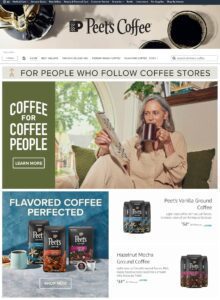
3. Amazon Stores
Amazon Stores are free, customizable multi-page storefronts available exclusively to registered brands. Each store has its own Amazon URL (amazon.com/stores/yourbrand), which you can use as a landing page for external advertising campaigns. You can organize pages by product category, collection, or campaign, and include images, videos, and featured product grids. Amazon’s data shows Stores with more than three pages generate 83% higher shopper dwell time and 32% higher attributed sales per visitor compared to single-page Stores.
4. Manage Your Experiments
Manage Your Experiments is an A/B testing tool that lets registered brands run controlled split tests on listing elements including A+ Content, product titles, main images, and bullet points. Amazon splits traffic between two versions and measures which one drives higher conversions. Tests typically run for 8 to 10 weeks, and Amazon provides statistical confidence data to confirm whether the results are significant enough to act on.
5. Virtual Bundles
Registered brands using FBA can create virtual product bundles that combine two or more existing ASINs into a single new listing without physically packaging them together. Amazon ships each item from existing FBA inventory. Virtual Bundles create new detail pages with their own indexing and advertising potential, which means new entry points for shoppers without the added complexity of new packaging or separate shipments.
Brand Analytics Access
Brand Analytics is one of the most underused advantages of Brand Registry. It gives registered brands access to first-party Amazon search and purchase data that no unregistered seller or third-party tool can access. The insights available here are more accurate than any estimated data from external keyword research platforms because they come directly from Amazon’s own systems.
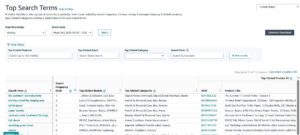
1. Top Amazon Search Terms
Top Search Terms data shows the most frequently searched terms on Amazon by search frequency rank. For each term, it shows the top three products that shoppers clicked on after searching. This tells you which products Amazon’s own shoppers are choosing over yours for a given keyword, which is more actionable than a keyword volume estimate.
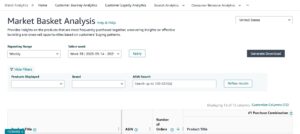
2. Market Basket Analysis
The Market Basket Report shows the products most frequently purchased alongside your products in the same transaction. This reveals natural cross-sell opportunities and helps you identify complementary products to develop, bundle, or advertise alongside your existing catalog.
3. Repeat Purchase Behavior
The Repeat Purchase Report shows how many of your customers are buying from your brand more than once and at what frequency. For consumable or replenishable products, this data is critical for understanding actual customer retention and lifetime value rather than estimating it from order metrics alone.

4. Customer Demographics
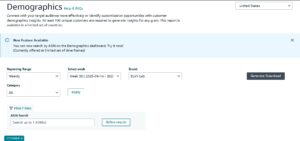
The Demographics Report breaks down your customer base by age group, household income, education level, gender, and marital status. This is real purchase data from verified Amazon customers, not survey estimates. It informs product development, creative decisions, and off-Amazon advertising targeting.
5. Customer Loyalty Analytics
Amazon added updated loyalty and retention dashboards to Brand Analytics in 2025. These dashboards track new-to-brand customer acquisition rates, repeat purchase rates by ASIN, and customer acquisition costs at the product and campaign level. Combined with the repeat purchase data, this gives registered brands a complete picture of customer behavior from first purchase through long-term retention.

Advertising Tools
Several of Amazon’s highest-performing ad formats are exclusively available to registered brands. Given that Amazon’s advertising business generated over $46 billion in revenue in 2023, the platform continues to invest in ad products, and registered brands get access to the full suite.
1. Sponsored Brands
Sponsored Brands ads appear at the top of search results and feature your brand logo, a custom headline, and up to three products. These ads drive traffic directly to your Store or a custom landing page. Video formats within Sponsored Brands consistently generate 2 to 3 times higher click-through rates compared to static image formats. Only registered brands can run Sponsored Brands campaigns, which means non-registered sellers cannot compete for these top-of-search placements.
2. Sponsored Display
Sponsored Display lets registered brands retarget shoppers who viewed your products, similar products, or specific audience segments. Ads appear on product detail pages, in search results, and off-Amazon on third-party websites through Amazon’s demand-side network. While a basic version of Sponsored Display is available to some non-registered sellers, the full audience targeting capabilities and off-Amazon reach require Brand Registry enrollment.
3. Sponsored TV
Sponsored TV is Amazon’s self-service streaming ad product that places video ads on Amazon Freevee and connected streaming properties. There is no minimum spend requirement, and campaigns are served using Amazon’s first-party audience data. This format reaches households through connected TVs in an environment where traditional Amazon PPC cannot. Access is limited to registered brands.
4. Brand Referral Bonus
The Brand Referral Bonus gives registered brands a credit of approximately 10% on sales generated through external traffic sources. When you drive shoppers to Amazon from Google Ads, social media, or email campaigns using Amazon Attribution tracking links, Amazon credits back roughly 10% of the resulting sale value. This effectively reduces the referral fee on externally driven sales and makes off-Amazon advertising significantly more profitable for registered brands.
Customer Engagement Tools
Direct communication with customers on Amazon is tightly restricted for all sellers. Brand Registry opens up several tools that bring registered brands closer to their customers in ways that unregistered sellers simply cannot access.
1. Manage Your Customer Engagement
The Manage Your Customer Engagement tool lets registered brands send promotional emails to shoppers who follow their brand on Amazon. You can use these emails to announce new product launches, promote limited-time deals, or share seasonal campaigns.
2. Amazon Vine
Amazon Vine is a program where Amazon’s most trusted reviewers receive your product for free in exchange for an honest, verified review. Registered brands can submit up to 30 units per parent ASIN into the Vine program. Products entering the market with zero reviews face a significant conversion rate disadvantage. Products with at least 15 reviews convert measurably better than those with none, and Vine provides a structured, policy-compliant way to build that initial review foundation.
3. Amazon Live
Amazon Live lets registered brands create shoppable livestream content directly on the Amazon platform. Streams can appear on product detail pages and on the Amazon Live homepage. Brands use livestreams to demonstrate products, answer shopper questions in real time, and drive immediate purchase decisions. The format is particularly effective for products that benefit from demonstration, such as kitchen tools, beauty products, and fitness equipment.
International Brand Registry Expansion
Brand Registry enrollment in one marketplace can be extended to other Amazon marketplaces where you hold valid trademarks.
1. Multi-Country Coverage
A single Brand Registry account can manage brand protection across all Amazon marketplaces, including the US, Canada, Mexico, UK, Germany, France, Italy, Spain, Japan, Australia, India, UAE, Saudi Arabia, and others. Each marketplace may require a separate trademark from a locally accepted trademark office, but management is centralized through the Brand Registry portal.
2. Global Selling Advantages
Registered brands expanding internationally retain access to all Brand Registry tools in each marketplace where they are enrolled. A+ Content, Stores, and advertising tools carry over. Protection tools like Report a Violation work across marketplaces, and Project Zero can be enabled globally once accepted.
3. IP Accelerator for International
Amazon’s IP Accelerator program operates in multiple countries, including the US, UK, EU, Canada, Japan, and India. If you need to file trademarks in new countries to expand your Brand Registry coverage, IP Accelerator provides access to vetted law firms and early enrollment benefits while the trademark is still pending.
Who Should Not Enroll in Amazon Brand Registry
Brand Registry is built for brand owners. Certain seller types will not benefit or will not qualify.
1. Resellers Without Brand Ownership
If you resell products from other brands (retail arbitrage, wholesale), you cannot enroll those brands in Brand Registry. Unauthorized enrollment attempts will be rejected and may result in account-level consequences.
Frequently Asked Questions
How long does Amazon Brand Registry approval take?
Most applications are approved within 2 to 10 business days after the verification code is submitted. Applications flagged for additional review may take up to 30 days.
Is Amazon Brand Registry free?
Yes. Amazon does not charge any fee to enroll in Brand Registry. The primary cost is obtaining a registered trademark, which varies by country and whether you use an attorney.
Can I enroll with a pending trademark?
Not through the standard process. Pending trademarks only qualify if you enroll through Amazon’s IP Accelerator program, which grants early access while the trademark application is being processed.
What type of trademark does Amazon accept?
Amazon accepts text-based trademarks (word marks) and image-based marks that contain words, letters, or numbers. Pure design marks without text are not accepted.
Can multiple sellers be enrolled under the same brand?
Yes. The brand owner can add additional users (agents or administrators) to the Brand Registry account. Each user can be assigned different permission levels.
Does Brand Registry guarantee the Buy Box?
No. Brand Registry gives you listing control and content authority, but Buy Box ownership is determined by price, fulfillment method, seller performance, and other factors. Being the brand owner does give practical advantages in disputes over listing ownership.
Can I enroll if I sell on Amazon as an Individual seller?
You can enroll in Brand Registry with an Individual account, but many tools (Sponsored Brands, A+ Content, Stores) require a Professional seller account at $39.99 per month.
What happens if my trademark expires or is cancelled?
Amazon periodically re-verifies trademark status. If your trademark is cancelled, expired, or invalidated, your Brand Registry enrollment may be revoked and you will lose access to all associated tools and protections.
Can I enroll my brand if I only sell through FBM (Fulfilled by Merchant)?
Yes. Brand Registry is available to both FBA and FBM sellers. However, some features like Virtual Bundles require FBA inventory.
How do I add products to my brand after enrollment?
Once enrolled, you can add new ASINs to your brand by listing products with your registered brand name. Amazon associates new listings with your Brand Registry account based on the brand name field.