
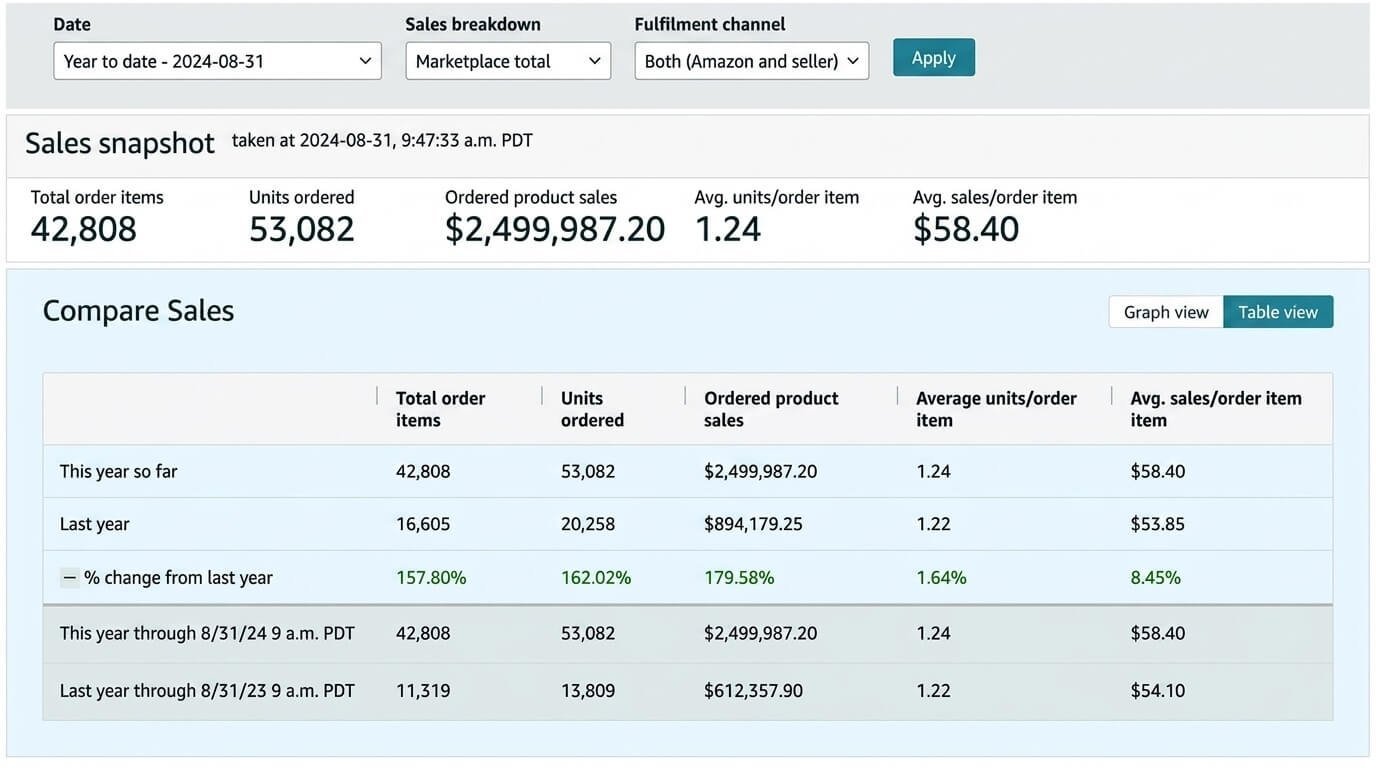
$2.5M in eight months, with seasonal demand finally captured.
This Sports and Outdoors brand had strong products and a clear summer demand window, but its account was being managed as if every month were the same. We rebuilt the keyword architecture, aligned creative to summer search intent, added external traffic and used SQP data to steer the funnel. Revenue reached $2.5M across eight months, CTR improved 32%, conversion rose 25%, and target terms reached the top five organically.
Strong product. Missed season.
The brand sold outdoor gear with genuine spring and summer demand, but the account was not built to capture the wave. Campaigns ran as if every month were equal, the listing was not aligned to summer search intent, and Amazon was the only traffic source.
The problem was bigger than bids. Seasonal growth required the main image, keyword architecture, campaign timing, external traffic and organic ranking to point in the same direction before demand peaked.
We treated the season like a launch event, not a calendar adjustment.
| Category | Sports and Outdoors |
|---|---|
| Demand pattern | Concentrated spring and summer peak |
| Campaigns | Non-seasonal structure |
| Main image | Not tested for summer CTR |
| External traffic | None at the start |
| A+ Content | Not aligned to seasonal benefits |
| Keyword data | No SQP-led bid decisions |
| Opportunity | Peak demand left largely uncaptured |
Own the season. Capture the wave.
The goal was not simply to spend more during summer. It was to improve the efficiency of every seasonal impression while building the organic positions that would keep working after the peak.
Use summer-specific visual context and image testing to improve the first decision shoppers make in search results.
Prioritise high-volume seasonal terms and use paid velocity to support organic movement.
Use external traffic to supplement Amazon's internal algorithm during the highest-value buying window.
Coordinate PPC, listing improvements and SQP insights so growth did not come at the cost of conversion.
Advertising, listing and data, one coordinated push.
Seasonal accounts fail when each function is adjusted separately. This one worked because the creative, keyword map and budget decisions were tied to the same summer demand curve.
Seasonal PPC architecture
Dedicated seasonal campaigns were timed to peak search demand instead of running evergreen campaigns unchanged. Sponsored Brand creative used summer-led messaging, Sponsored Display re-engaged high-intent audiences, and external traffic ran alongside Amazon ads.
DataDive-powered seasonal rebuild
DataDive surfaced the keyword gaps between the listing and top-ranking competitors. Main images were A/B tested for summer shoppers, A+ Content was rewritten around outdoor use cases, and titles and bullets moved from generic description language to seasonal intent.
SQP funnel analysis every week
Search Query Performance data showed where each keyword was winning or leaking across the funnel. That made bid adjustments more precise and separated terms earning impressions from terms earning profitable sales.
Seasonal PPC, listing optimisation, SQP analysis and external traffic worked together across the full buying cycle.
The season built milestone by milestone.
The account moved through setup, listing improvement, seasonal launch, ranking and revenue scale in a deliberate sequence.
Seasonal gaps, competitor positions and SQP opportunities mapped.
Summer-oriented creatives improved CTR before the main push.
PPC and external traffic aligned to peak demand.
Organic visibility secured on target seasonal terms.
Eight months of coordinated seasonal growth.
The season was finally captured.
Revenue, click-through, conversion and organic ranking all moved together because the account was rebuilt around the buying window.
Generated across eight months.
Season ownedOverall click-through improvement.
Above baselineConversion rate increase during the season.
SustainedTarget seasonal terms reached top-five positions.
Rank secured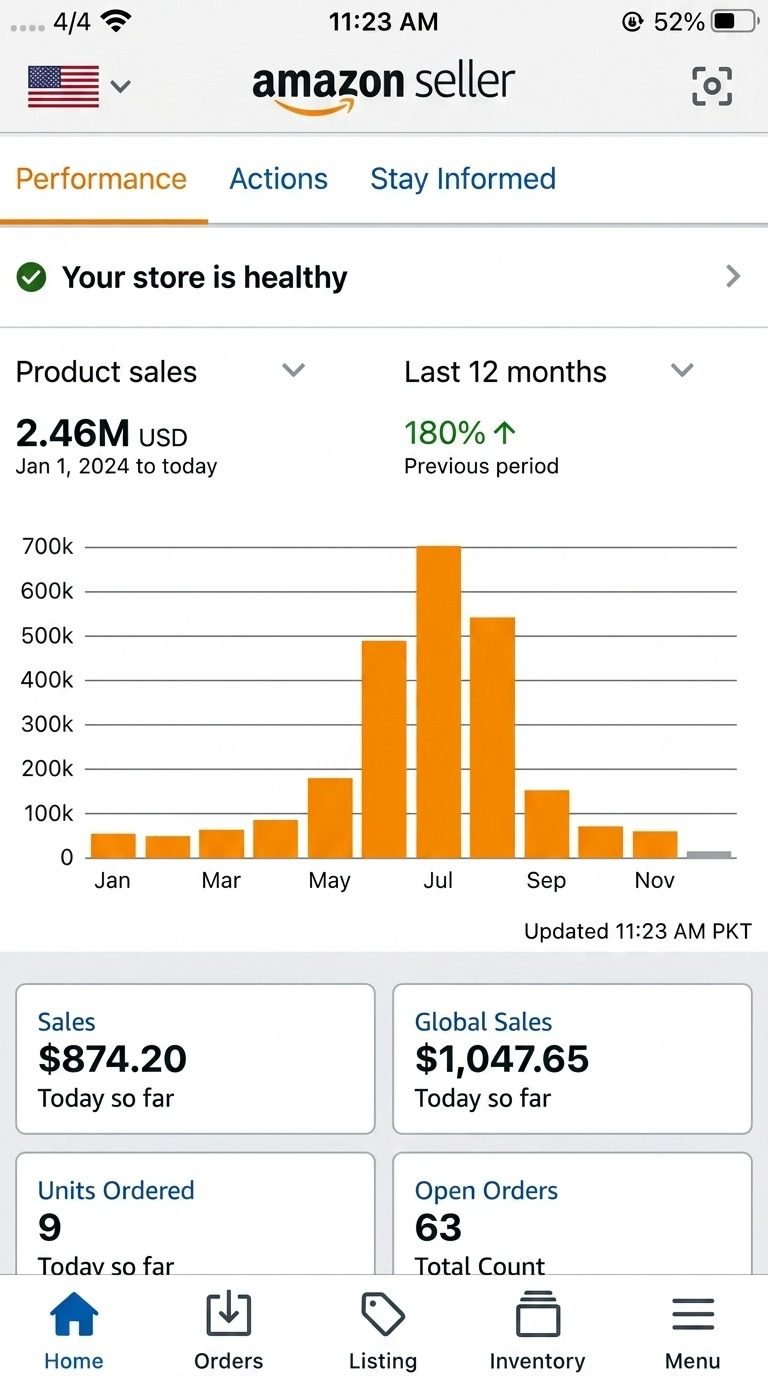
Seasonality is not a bid multiplier.
The account grew because the listing, keyword architecture, PPC timing, external traffic and SQP decisions were designed for the same peak. That alignment improved the click, the conversion and the rank at the same time.
$2.5M came from treating the season like a launch event.
What sellers usually ask next.
Was this just a seasonal bid increase?
No. The listing, main images, keyword architecture, Sponsored Brand and Display campaigns, external traffic and SQP analysis were all rebuilt around the seasonal demand window.
Why use external traffic with Amazon PPC?
External traffic added high-intent visitors during the peak and helped supplement Amazon's internal algorithm, especially while the organic positions were still being built.
Can the same strategy work for another seasonal category?
The sequence transfers. The opportunity depends on the length of the demand window, category competition, inventory readiness and how early the account prepares.
Is your account ready to capture its next peak?
Book a free 30-minute discovery call. We will map your seasonal keyword opportunities, campaign gaps and listing priorities, then show you the path to stronger growth.
Book free discovery call