$50K to $170K, with 240% revenue growth in seven months.
This Home and Kitchen brand had a solid product and healthy demand, but its listings and campaigns were pulling in different directions. We rebuilt the keyword architecture with Helium 10 and DataDive, aligned listing copy with buyer intent, and moved terms through a Broad, Phrase and Exact funnel. Monthly revenue reached $170K while TACoS held at 21% and ACoS at 32%.
The product was working. The keyword system was not.
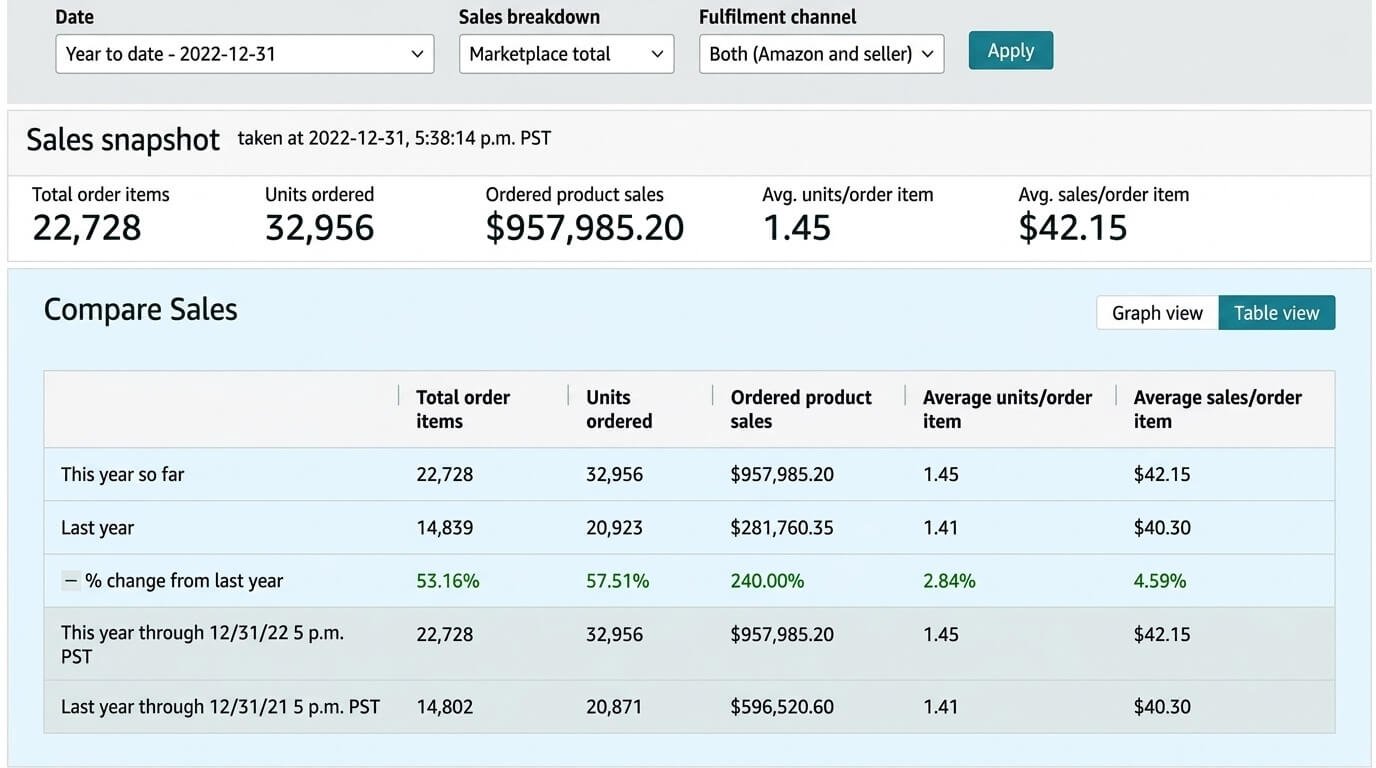
When the engagement began in June 2022, the brand was generating $50K per month. The listings were visually underdeveloped, campaigns were not grouped by search intent, and the account had no consistent path for moving a discovered keyword from research into profitable exact-match control.
That created two problems at once: paid traffic was harder to scale efficiently, and the strongest terms were not being reinforced in the listings. The product had demand, but the account was not turning search data into a compounding system.
The fix was to align listing optimisation, keyword research and PPC around the same funnel.
| Category | Home and Kitchen |
|---|---|
| Engagement | Seven-month growth transformation |
| Starting revenue | $50K monthly |
| Listings | Visually underoptimised |
| Keyword strategy | No shared funnel architecture |
| Campaigns | Not grouped by intent or stage |
| Long-tail terms | Under-researched and underused |
| Promotions | No consistent loyalty mechanics |
The account stopped treating keywords as one big list.
Every term received a role based on position, intent and conversion potential. The listing, campaign structure and promotional calendar were then built around those roles.
Listings rebuilt around proven buyer language
Search terms discovered through campaigns were fed back into titles, bullets and backend fields. That created a reinforcing loop: PPC found the language that converted, and the listing used that language to build organic relevance.
Helium 10 and DataDive mapped the opportunity
The keyword set was organised by current organic position, ranking gap, purchase intent and competitive density. Higher-position opportunities and long-tail terms were prioritised because they could produce better traffic at a healthier cost.
Broad, Phrase and Exact given separate jobs
Broad campaigns discovered converting terms. Phrase campaigns qualified and scaled the winners. Exact campaigns locked in the strongest performers with tighter bid control and less wasted spend.
The conversion spike was turned into repeat demand
Sponsored Brand Product Collection campaigns expanded visibility, while Lightning Deals, coupons and Subscribe and Save added urgency and a path back for repeat buyers. The account grew without treating every order as a brand-new paid acquisition.
Three keyword layers. One coherent system.
The account needed more than a keyword list. It needed a map showing what each term was supposed to do and where it belonged in the growth sequence.
| 01 | Organic visibilityHigher-position prioritisation | Terms with the strongest ranking potential were prioritised first. A small position improvement on these keywords could produce an outsized organic traffic gain with less incremental ad spend. |
|---|---|---|
| 02 | Conversion efficiencyLong-tail targeting | Intent-rich long-tail phrases were researched and targeted because they convert at higher rates and lower cost than broad category terms, helping maintain TACoS at 21% and ACoS at 32% during the scale. |
| 03 | Listing integrationSearch terms fed back into copy | Winning search terms from the campaigns were integrated into titles, bullets and backend fields. Paid discovery and organic relevance reinforced each other instead of running as separate strategies. |
Discovery to precision, without losing the thread.
Most accounts run Broad, Phrase and Exact campaigns in isolation. This account used horizontal and vertical funneling so the best-performing keywords moved systematically from discovery into precision control.
Broad found the terms. Phrase scaled the winners. Exact locked in the highest performers. Every week, conversion data determined which keywords graduated and which were removed.
Discovery, wide-net targeting, new search terms.
Qualification, scaled winners, tighter control.
Precision, proven terms, controlled bids.
Up from $50K per month. +240% growth, TACoS held at 21%, and ACoS maintained at 32% while the funnel matured.
Revenue up, advertising efficiency intact.
The strategy did not buy growth by letting costs run loose. It built a clearer path from discovery to conversion, then held the account to stable efficiency ratios.
Peak monthly revenue, up from $50K.
+240% in 7 monthsTotal ad cost as a share of total revenue.
MaintainedAdvertising cost held through the scale.
Balanced investmentBroad, Phrase and Exact stages connected.
Systematic migration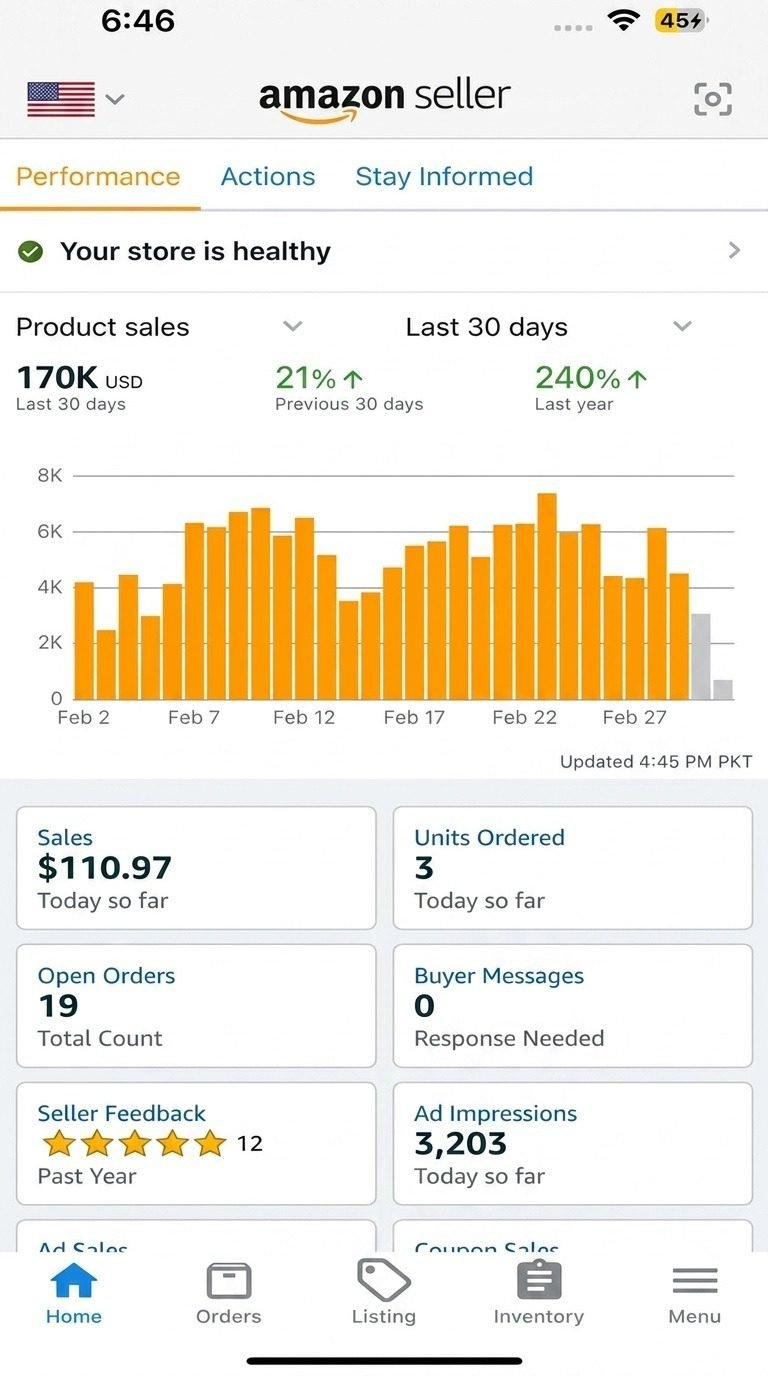
The listing and the funnel learned from each other.
PPC found the search terms that converted. The listing absorbed those terms. Organic relevance improved, while Broad and Phrase kept discovering the next opportunity and Exact protected the winners.
$50K to $170K was not a single bid change. It was a keyword system that kept getting smarter.
What sellers usually ask next.
Was this just a PPC restructure?
No. The listing, keyword research, funnel structure, Sponsored Brand Collections, promotions and Subscribe and Save all supported the same growth plan.
Why use Broad, Phrase and Exact together?
Each match type had a different job. Broad discovered, Phrase qualified and Exact controlled the proven terms. Keeping those jobs separate made budget and search-term decisions easier to read.
Can the same funnel work in another category?
The sequence transfers, while the targets depend on category demand, margins, competition and the starting quality of the listings.
Is your account hitting a revenue ceiling?
Book a free 30-minute discovery call. We will audit your keyword architecture, campaign structure and listing gaps, then show you what is capping growth.
Book free discovery call