Amazon PPC Cannibalization: When Ads Steal From Your Own Organic Rank
How to detect when your Sponsored Products campaigns are eroding the organic positions you already earned, and how to fix the structure without tanking sales in the process.

What Amazon PPC Cannibalization Actually Is
The pattern shows up in almost every mature account we audit. A product reaches page one organically for a high-volume keyword. The Sponsored Products campaign keeps running on that same keyword at full bid. Ad spend continues. ACoS looks reasonable. Total revenue holds steady. But TACoS, the number that actually reflects advertising efficiency across the whole account, has stopped improving. Sometimes it gets worse. The organic click share on that keyword quietly drops, and the ad keeps absorbing spend that would have come in for free.
That is PPC cannibalization. Your paid campaign is converting clicks on a position your listing would have earned organically anyway. You are paying for a sale that was already yours. The ad is not generating incremental revenue. It is billing you for revenue you had earned.
This article covers how to confirm cannibalization is happening in your account, how to measure the actual cost, the specific campaign structures that cause it, and how to reduce paid spend on organically-owned positions without losing ranking in the process. After reading this, you can open your Search Term Report and your organic rank tracker and diagnose this in a single afternoon.
From auditing 50+ accounts: PPC cannibalization is most severe in accounts that built strong organic rank through an aggressive launch phase but never adjusted their campaign structure afterward. The bids that were necessary at launch to push ranking are still running 12 months later, now burning budget on positions that no longer need paid support. In one home goods account (Q1 2026), cutting bids on seven organically-owned top-10 keywords reduced ad spend by $4,200 per month with no measurable drop in total orders over the following six weeks.
Why ACoS Hides Cannibalization and TACoS Reveals It
ACoS measures the ratio of ad spend to ad-attributed revenue. It has nothing to say about organic revenue. A campaign with a 22% ACoS looks perfectly efficient even if every single conversion it claims would have happened organically without the ad. ACoS cannot detect cannibalization. It is structurally blind to it.
TACoS is the metric that exposes the problem. The formula is straightforward:
When a product is genuinely ranking and converting organically, TACoS should fall over time as organic revenue grows without a proportional increase in ad spend. If TACoS has plateaued or is rising on a product that has been live for more than six months and is ranking in the top 10 for its primary keywords, that is the clearest signal that paid spend is not adding incremental revenue. It is cannibalizing it.
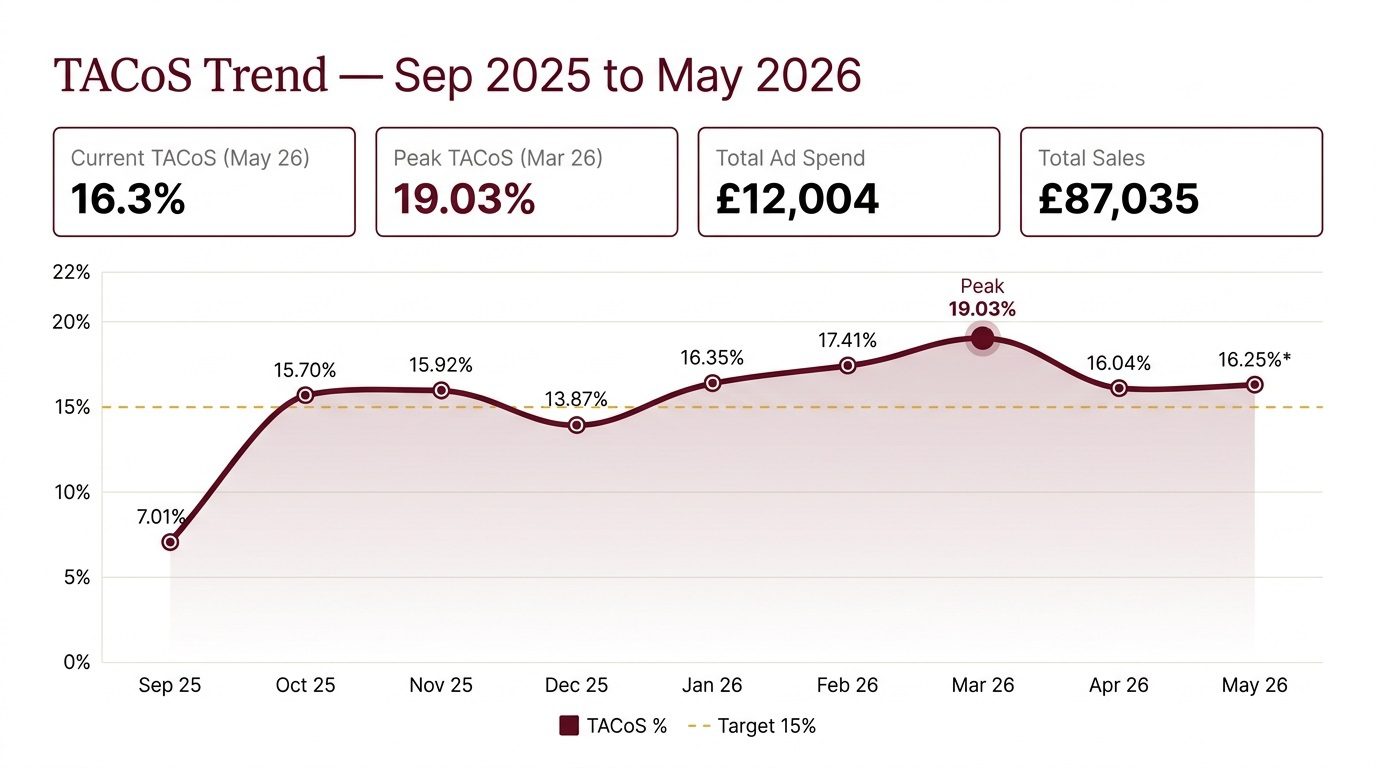
If your account is in the mature phase by age but showing TACoS above 25%, the most likely explanation is that paid campaigns are running on keywords where organic rank has already been won. The ads are not expanding your sales footprint. They are just taxing your existing one.
The test to apply: Pull your top 15 keywords by ad spend. For each one, check your current organic position. If you are ranking organically in positions 1 through 8 for any keyword taking more than 3% of your total ad budget, that keyword is a cannibalization candidate. It does not mean you should immediately cut the bid. It means you need to test what happens when you reduce it.
The Campaign Structures That Cause Cannibalization
Cannibalization does not usually happen because of a single bad decision. It builds up over time through several structural patterns that make sense early in a product’s life and stop making sense once organic rank is established.
No Bid Reduction After Organic Rank Is Won
The most common cause. During launch, you run exact match campaigns on your primary keywords at aggressive bids, sometimes $2.50 to $4.00 per click in competitive health and personal care subcategories, to buy top-of-search placement and signal purchase velocity to Amazon’s algorithm. It works. Six months later the product ranks organically in positions 2 through 5 on those same keywords. The bids have not changed. The campaign is still winning the top-of-search slot and spending at launch-phase rates on a position that no longer needs that level of support.
Auto Campaigns With No Negative Keyword Harvest
Auto campaigns match against whatever Amazon decides is relevant, which frequently includes the exact keywords your manual campaigns already own and your organic rank already holds. Without a regular negative keyword harvest from the Search Term Report, auto campaigns run spend on your strongest organic terms indefinitely. In accounts we have audited, auto campaigns in the home goods category regularly show 30 to 45% of their spend going to search terms that the exact match manual campaign is already covering.
Broad and Phrase Match on Organically-Owned Head Terms
Broad and phrase match campaigns exist to discover new search terms and funnel winners into exact match. Once a keyword is winning organically and in exact match, leaving it active in broad and phrase campaigns means it continues to generate impressions and clicks at a higher cost-per-click than necessary, because match type hierarchy still allows the exact match campaign to win but the broad campaign picks up variations and near-matches, some of which you are already ranking for organically anyway.
Sponsored Brands Video Running on Owned Brand Terms
Sponsored Brands Video campaigns on your own brand name and close variants are often justified for new competitors in a category. Once brand awareness is established and your ASIN holds the first organic result for your brand name, these campaigns are bidding against traffic that would have clicked your organic result for free. The incremental conversion lift from a Sponsored Brands Video ad over a first-position organic result is rarely worth the cost when the brand is already well recognized in its subcategory.
Where this gets complicated: Competitors can bid on your brand name. Cutting Sponsored Brands on your own brand terms is correct on keywords you dominate organically, but it opens the door for a competitor’s Sponsored Brands ad to appear above your organic result. The right answer is not to stop defending your brand terms entirely. It is to run a low-bid defensive Sponsored Brands campaign at a price that blocks competitors without spending as if you were trying to steal your own organic slot.
How to Detect Cannibalization In Your Account
Detection requires two data sources: your Search Term Report from Amazon Ads and an organic rank tracker. You need both. The Search Term Report tells you where you are spending paid budget. The organic rank tracker tells you whether you are already ranking there for free.
Step 1: Pull the Search Term Report
Go to Amazon Ads, select the relevant Sponsored Products campaigns, and download the Search Term Report for the last 30 days. Filter by spend descending. You want to work from the terms consuming the most budget downward.
Step 2: Add Organic Rank Data
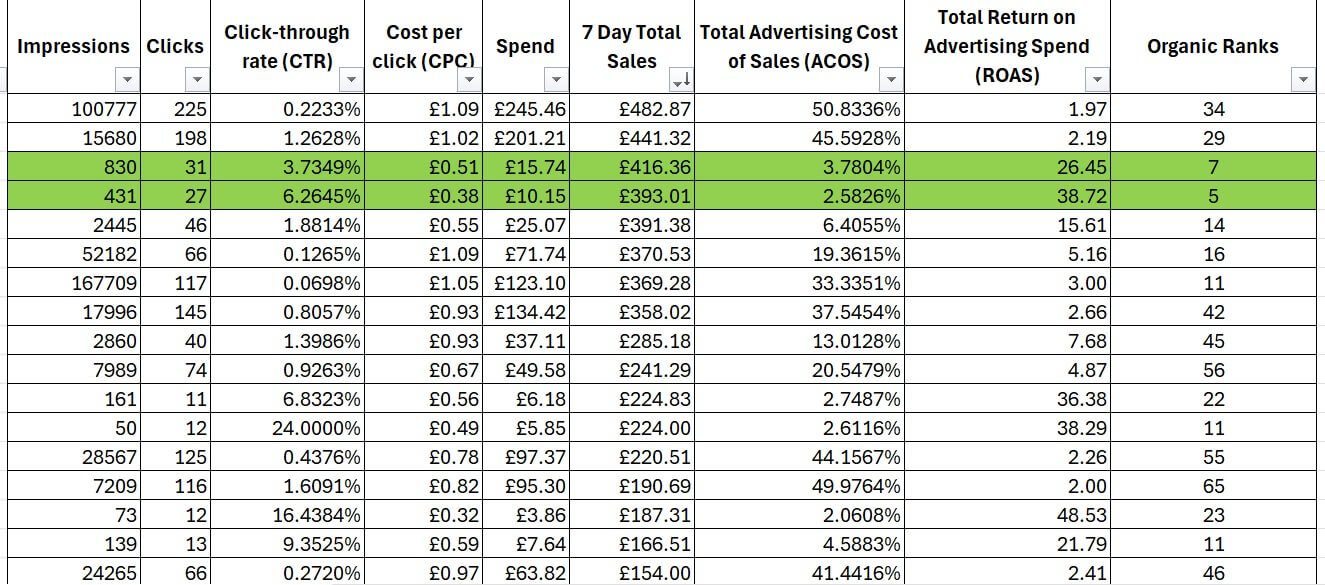
Pull your current organic positions for the top 20 to 30 keywords by ad spend from your rank tracker. Helium 10’s Keyword Tracker and DataDive both give daily organic rank by keyword. Match each search term from your Search Term Report to its current organic position. Any keyword where you are spending more than $150 per month in ads and ranking organically in positions 1 through 7 is a primary cannibalization candidate.
What to look for specifically: The worst cases are not the keywords with the highest total spend. They are the keywords with high spend, a good organic rank, and a high click-through rate on the ad. That combination means shoppers are clicking the ad instead of the organic result, and you are paying for the conversion. Sort your cannibalization candidate list by (ad spend × organic rank quality) to find the highest-value fixes first.
Step 3: Cross-Reference Brand Purchase Share
Once you have reduced bids on your cannibalization candidates, open Brand Analytics and pull the Search Query Performance report. Go to the Brand Metrics tab and track your brand purchase share week over week for each keyword you adjusted. This is the most reliable confirmation method available in the platform.
For keywords where you hold organic positions 1 through 3, you can go further and pause the campaign entirely rather than just reducing the bid. Then watch the brand purchase share for that keyword over the following two to three weeks. If purchase share stays flat or changes by less than 1 to 2 percentage points across those weeks, cannibalization was happening. The paid clicks were not bringing in additional buyers. They were intercepting buyers who would have clicked the organic result and purchased anyway.
Two to three weeks of stable purchase share after a pause or significant bid reduction is the clearest confirmation you will get without running a formal A/B test. At that point you have two options: reduce the bid further until ACoS sits at or below your target, or pause the keyword entirely. Our recommendation is to keep the campaign running at a low bid rather than pausing it completely. A live campaign with a conservative bid maintains your ad history on the keyword, keeps competitors from taking the paid slot cheaply above your organic result, and gives you a fast path back to full spend if organic rank softens in a future competitive period.
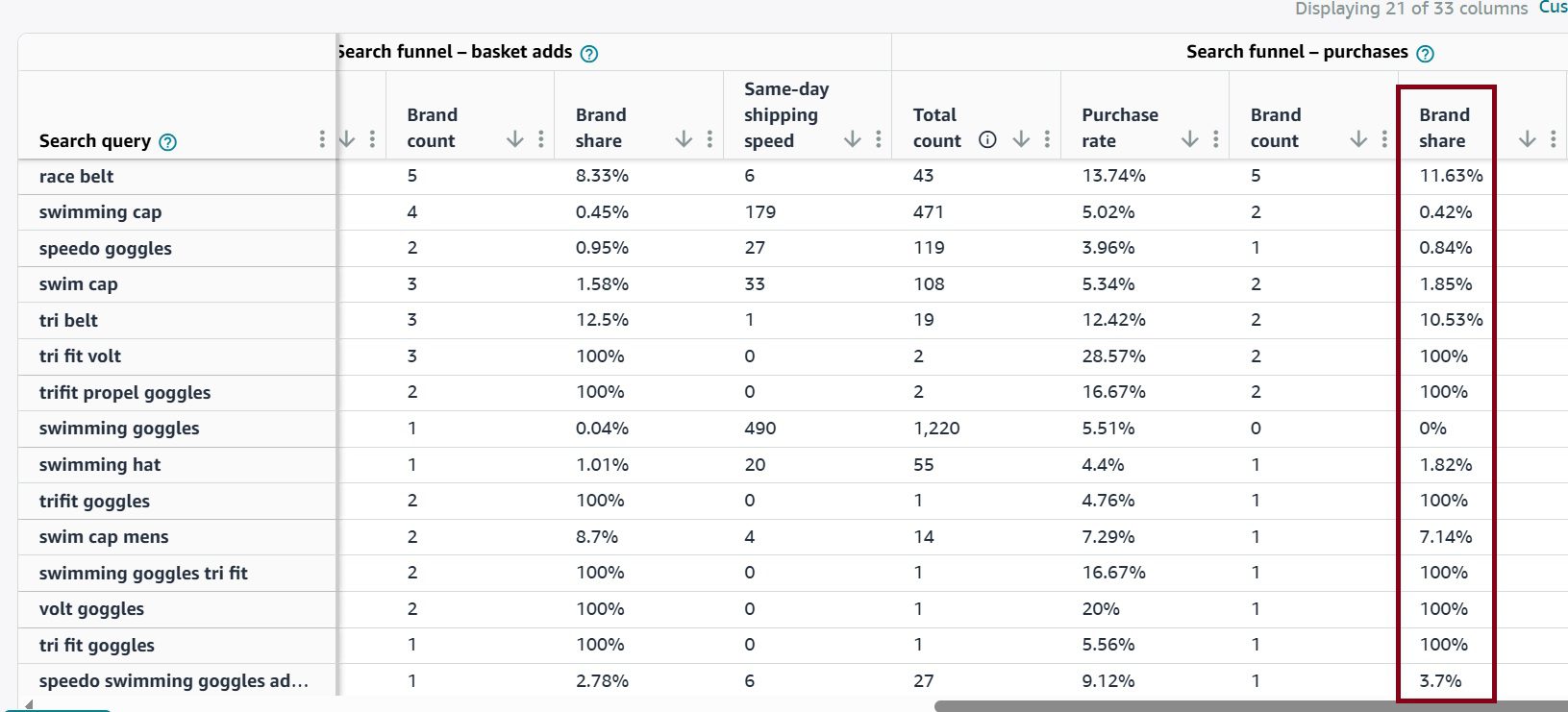
The rule of thumb: If brand purchase share holds within 2 percentage points for three consecutive weeks after reducing or pausing paid spend on a keyword, the ads were cannibalizing organic. Drop the bid to whatever level keeps ACoS at or below your category target and leave it there. Do not pause entirely. Low-bid coverage is almost always better than none.
| Account Signal to Check | What the Signal Tells You | Recommended Action to Take |
|---|---|---|
| Organic rank 1–7, ad spend > $150/mo on same keyword | High cannibalization probability | Reduce exact match bid by 40%, monitor for 3 weeks |
| Organic rank 1–7, ad spend $50–$150/mo on same keyword | Moderate cannibalization probability | Reduce bid by 20%, add to watch list |
| Organic rank 8–15, ad spend > $150/mo on same keyword | Ad is supporting rank, not cannibalizing it yet | Maintain bid, test a modest reduction after 60 days |
| Auto campaign spending on terms your exact match manual already covers | Duplicate spend, high cannibalization likelihood | Add as negative exact in auto campaign, let manual own the term |
| TACoS flat or rising while organic rank is improving | Paid ads are not adding incremental revenue | Audit your top 15 keywords for cannibalization before adding any new spend |
How to Fix Campaign Structure Without Losing Rank
The mistake most sellers make when they find cannibalization is cutting too fast. Pausing a campaign on a keyword your product currently ranks for in position 3 does not guarantee the position holds. Amazon’s A9 algorithm uses paid conversion velocity as one of the signals that reinforces organic rank. If the ad has been providing 30 to 40% of the conversions on that keyword and you cut it overnight, the organic rank can slip within two to three weeks.
The correct approach is a staged bid reduction, not an immediate pause.
Reduce Bid by 30 to 40% on Cannibalization Candidates
Do not pause. Reduce. A 40% bid cut on a keyword where you are paying $2.80 per click takes you to $1.68. In most categories that still wins some placements, particularly at non-peak hours, but it substantially reduces total spend. Set a reminder to review organic rank for those keywords in 21 days.
Harvest and Negative the Auto Campaign
Pull the Search Term Report for all active auto campaigns. Every term appearing in both your auto campaign and your exact match manual campaign should be negated as exact in the auto campaign. Use negative exact, not negative phrase. Negative phrase on a broad term blocks too many variants. Do this every two weeks without exception. Auto campaigns that run without regular negative harvesting are the single fastest way to rebuild cannibalization after you have fixed it.
Run a 3-Week Hold Period Before Any Further Cuts
After the initial bid reduction, leave everything alone for three weeks. Pull organic rank at week one, week two, and week three. If rank holds, reduce the bid another 20%. If rank drops, restore the bid and wait another four weeks before testing again. Some keywords genuinely need paid support to hold rank. You find out which ones by testing, not by assumption.
Separate Launch Keywords from Maintenance Keywords
Once you have confirmed that a keyword holds organic rank without heavy paid support, move it to a separate “maintenance” campaign with a capped daily budget and a lower bid. Keep your high-bid exact match campaigns focused entirely on keywords where organic rank is not yet in the top 10. This structure makes cannibalization visible on an ongoing basis rather than something you fix once and forget.
Set Up a Defensive Bid Floor on Your Top Terms
Once the bid reductions are in place, do not drop to zero. Run a defensive exact match bid at whatever level keeps your ad in the rotation occasionally, typically 30 to 50% of what a top-of-search position costs. This matters for two reasons: it signals to Amazon’s algorithm that you still intend to compete on the term, and it blocks competitors from stealing the paid slot above your organic result at low cost.
What to track after the fix: Total orders, organic rank by keyword, and TACoS. Not ACoS. A rising ACoS after these bid cuts is expected because you are now spending less on terms where you were converting easily. TACoS should fall as organic revenue holds while ad spend drops. If total orders drop more than 8% and organic rank slips below position 10 on the affected keywords within 21 days, the keyword genuinely depended on paid support and the bid cut was too aggressive.
Cutting $4,200 Per Month in Wasted Spend Without Losing a Single Rank
In January 2026, we audited a home goods account that had been live for 14 months. The lead ASIN was generating approximately $28,000 per month in total revenue. TACoS had been sitting between 19% and 22% for the previous four months despite the product holding organic positions 2 through 5 on its seven highest-volume exact match keywords.
Situation. The account had been launched aggressively with bids between $2.40 and $3.60 on seven core exact match keywords. Those keywords had been instrumental in building organic rank during months one through five. By month eight the product was ranking organically in positions 2, 3, 4, 4, 5, 5, and 7 on those seven terms. The bids had not changed. Monthly ad spend on those seven keywords alone was running $4,800 per month. The auto campaign was also spending $900 per month, of which roughly $420 was going to the same seven search terms.
Action. We reduced exact match bids by 40% on the five keywords where organic rank was position 4 or better, and by 25% on the two keywords ranking 5 and 7. We negated all seven terms in the auto campaign using negative exact. We did not pause any campaign. We set a 21-day hold period and tracked organic rank daily through Helium 10’s Keyword Tracker.
Result. After 21 days, organic rank on all seven keywords held within one position of where they were before the bid reductions. After 42 days, five of the seven keywords had improved by one position, likely because the product was now earning a higher proportion of organic clicks relative to paid, which Amazon’s algorithm treats as a quality signal. Total ad spend on those seven keywords dropped from $5,220 per month to $1,040 per month. Total monthly orders on the ASIN went from 412 to 408 over the same period, a difference within statistical noise. TACoS fell from 21% to 11.8% by week eight.
The number that matters: $4,180 per month in recovered margin, with no meaningful change in total orders or organic positions. At a 30% gross margin on $28,000 monthly revenue, this account was spending 62% of its total margin dollars on ads. After the cannibalization fix, that dropped to 31%. This is not an exceptional account. This pattern exists in the majority of accounts that built rank through an aggressive launch and never restructured afterward.
When Reducing Paid Support Actually Does Hurt Rank
Not all ad spend on organically-ranked keywords is cannibalization. Some keywords genuinely need paid conversion support to maintain their organic positions. Getting this distinction wrong is the most expensive mistake in this process.
Keywords That Depend on Paid Velocity
In highly competitive subcategories, like protein powder or collagen peptides in supplements, organic rank at positions 1 through 5 requires sustained purchase velocity. The products at the top of those pages are not just better listings. They are selling more units per day, and Amazon ranks them accordingly. If your organic rank at position 4 is partly a function of 30 paid conversions per week on that keyword, removing those conversions will eventually cause the rank to slip. It will not happen on day one. It typically takes three to five weeks. This is why the 21-day hold period exists: to catch the slip before it becomes a permanent rank loss.
Seasonal Categories With Volatile Organic Rank
In outdoor and seasonal categories, organic rank fluctuates by 5 to 15 positions across the year based on competitor activity, not just your own conversion rate. Cutting paid support at the wrong time in a seasonal cycle can look like a stable rank for three weeks and then collapse when competitor bids increase heading into peak season. For seasonal categories, run the cannibalization audit and any bid tests during off-peak windows, not in the four to six weeks before a major seasonal demand spike.
Products With Low Review Counts
A product with fewer than 50 reviews holding a top-5 organic position is often holding that position partly on the strength of paid velocity. The listing has not yet earned the review weight to hold rank on conversion rate alone. In this situation, paid support is not cannibalization. It is organic rank maintenance. Wait until the product has at least 80 to 100 reviews before running any meaningful bid reduction test on its primary keywords.
The failure mode to avoid: Auditing for cannibalization, finding it, cutting bids aggressively across the whole account at once, and then restoring everything three weeks later when orders drop. This is worse than doing nothing. It disrupts your campaign history, signals erratic bidding behavior, and can take 8 to 12 weeks to stabilize. Do this keyword by keyword, with the staged reduction process described in Section 5.
Building Cannibalization Detection Into Weekly Account Management
The fix described in Section 5 is not a one-time event. Any account with active PPC campaigns will rebuild cannibalization over time, especially if auto campaigns are running without regular maintenance. The keywords that need paid support today will not need it in six months if organic rank improves. The account needs a process that catches cannibalization before it becomes a four-month drain.
The Weekly Checklist
- ✓ Pull the Search Term Report every Monday. Sort by spend descending. Flag any term appearing in both auto and exact match manual campaigns and add to the auto campaign’s negative exact list.
- ✓ Check organic rank on your top 10 keywords by spend. Any keyword that moved into positions 1 through 6 this week joins the cannibalization watch list for a potential bid reduction test.
- ✓ Review TACoS for the trailing 14 days. If it has increased by more than 2 percentage points and organic rank is holding, open the Search Term Report and look for newly high-spend terms on organically-owned positions.
- ✓ For any keyword currently in a bid reduction hold period, check if organic rank has moved more than 2 positions in either direction. If it has improved, accelerate the next bid reduction. If it has dropped by 3 or more, restore the previous bid immediately.
- ✓ Open Brand Analytics and pull the Search Query Performance report. For each keyword on your cannibalization watch list, record brand purchase share for the current week. Compare it against the previous two weeks. If purchase share has held within 2 percentage points across three consecutive weeks since you reduced or paused the bid, cannibalization is confirmed on that keyword. Keep the campaign live but drop the bid to whatever level holds ACoS at or below your target. Do not pause entirely.
Setting Up a Cannibalization Dashboard in Spreadsheet
Track three columns per keyword on your watch list: current organic rank, current ad spend per week, and the date the bid reduction started. Update weekly. The goal is a running record that shows you exactly how rank responds to bid changes across different keywords over time. After running six to eight tests, you will have enough account-specific data to predict which keywords can hold rank without heavy paid support and which genuinely need it.
Amazon’s Search Term Impression Share report inside Amazon Ads gives you impression share by keyword for your campaigns. A term where your impression share is 60% or above on a keyword you already rank for organically in the top 5 is almost certainly a cannibalization situation. Check this report monthly alongside your organic rank data.
How Cannibalization Differs by Category
The same keyword-rank combination behaves differently depending on the category. Applying a one-size approach across a supplement account and a home goods account will produce the wrong results in at least one of them.
| Amazon Category | Organic Rank Stability | Cannibalization Risk | Key Context for This Category |
|---|---|---|---|
| Health & Household (supplements) | Moderate | High | High CPCs ($1.80–$2.80) mean paid waste is expensive. Long purchase cycles mean organic rank retention is critical. Review count heavily influences rank stability. |
| Home & Kitchen | High | Medium-High | Once organic rank is established above position 5, it tends to be stable. Paid support cutback tests usually work cleanly here. |
| Sports & Outdoors (seasonal) | Low (seasonal volatility) | Medium | Rank shifts 8–15 positions between peak and off-peak. Run cannibalization tests only during stable off-peak windows. |
| Pet Supplies | High | High | Strong repeat purchase. Once organic rank is held, Subscribe & Save velocity supports it. Paid cannibalization particularly wasteful on subscription-driven keywords. |
| Tools & Home Improvement | High | Medium | Lower CPCs ($0.80–$1.40) reduce absolute dollar waste but cannibalization still inflates TACoS. Lower urgency to fix than in high-CPC categories. |
In the supplement category specifically, the interaction between Subscribe and Save and organic rank makes cannibalization more damaging than in most other categories. Every subscriber added under a given ASIN generates monthly repeat purchase revenue that is entirely organic. Paid spend that was used to acquire a subscriber at launch should not still be running at the same rate once that subscriber base is generating compounding revenue. In mature supplement accounts we manage, TACoS targets for subscription-heavy ASINs are 6 to 10%, because 40 to 60% of revenue is coming from reorders that cost nothing to advertise.
Three Things to Do After Reading This
Most accounts we audit have between $1,500 and $6,000 per month in recoverable cannibalized spend. The work to find it takes a few hours. The work to fix it is staged over six to eight weeks. The return is permanent: lower TACoS, higher margin on the same revenue, and a campaign structure that keeps separating launch-phase keywords from organically-owned ones going forward.
Run the cannibalization audit this week
Pull the Search Term Report for the last 30 days. Sort by spend. Add organic rank data for your top 20 keywords. Flag every keyword where organic rank is position 1 through 7 and ad spend exceeds $150 per month. That list is your starting point.
Negative your auto campaign this week
Find every term in your auto campaign that is also being targeted by an exact match manual campaign. Add it as a negative exact in the auto campaign. Do this today, not next month. Auto campaign duplicate spend is the fastest thing to stop.
Switch to TACoS as your primary metric
Stop optimizing for ACoS in isolation. Build a TACoS tracking column in your weekly reporting. If TACoS is flat or rising on a product where organic rank is improving, you are in a cannibalization situation and you now have the tools to find and fix it.
Never cut bids across the board at once
Test one to three keywords at a time. Hold for 21 days before the next reduction. Build an account-specific history of which keywords hold rank without paid support and which do not. That knowledge is worth more than any general benchmark.
If your TACoS problem goes beyond cannibalization, the issue may be in your campaign structure or your negative keyword strategy. Both affect how much of your ad budget reaches genuinely incremental clicks.
These figures come from our client data. Results vary by category, competition level, and listing quality. The spend and rank numbers cited in this article reflect specific accounts managed by Ecom Brainly between Q3 2025 and Q1 2026.
Think your account has cannibalization?
We audit accounts across home goods, health, sports, and pet categories. Book a free 30-minute call and we will show you what we find before you commit to anything.